


If you’ve run an e-commerce operation for any length of time, you already know how much of the day disappears into the small stuff. Updating product details, checking inventory, chasing reports, fixing listing errors — it never ends. None of these tasks grow revenue on their own, but missing one can throw the whole system off. This is especially true for sellers relying on an Amazon Fba Management Service, where even small operational gaps can impact performance.
That’s why more brands are starting to use RPA (Robotic Process Automation) — not to replace people, but to handle the grunt work that keeps piling up. Think of it like a digital assistant that quietly cleans up the background mess while your team focuses on real decisions.
At Perfality, we’ve helped sellers automate the dull, repetitive jobs that were burning hours every week. Once those systems click into place, teams finally have the time to do the work that actually moves sales forward.
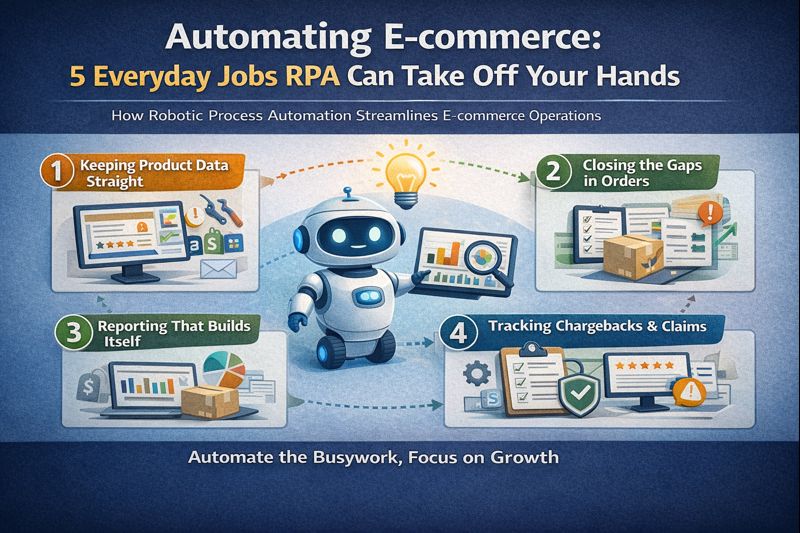
1. Keeping product data straight
Product data never sits still. Prices change, stock levels move, and listings need constant tweaks. When you’re selling on multiple platforms, manual updates turn into chaos fast.
With a simple Workflow Automation, you can update one source — your master catalog — and have those changes flow to Amazon, Walmart, Shopify, and anywhere else automatically. No more duplicate work. No more outdated prices. It’s not flashy, but it keeps your operation clean and accurate. That’s real Operational Efficiency in practice.
2. Closing the gaps in orders
Order reconciliation isn’t anyone’s favorite job, but it’s one of the easiest places for money to slip away. Orders flow between systems — marketplaces, warehouses, payment partners — and small mismatches add up.
RPA bots can follow each order through the chain and flag anything that looks off. Missing payments, partial shipments, double entries — you’ll see them before they turn into accounting headaches.
3. Reporting that builds itself
Most teams spend too much time building reports and not enough time using them. That’s backwards.
Automation fixes that. Each night, RPA can pull numbers from your marketplaces, ads, and inventory systems, then drop fresh reports in your inbox. When you log in the next morning, you already know where things stand.
It’s not about more data — it’s about less scrambling.
4. Tracking chargebacks and claims
Every damaged package or delayed shipment means paperwork, follow-ups, and more delays. Without a system, these cases get lost in inboxes.
Automation can create a ticket for every claim, attach proof of delivery, and remind your team until it’s resolved. That’s the backbone of a real Claims Process — steady, trackable, and easy to manage.
5. Watching your reviews without losing your mind
Customer feedback shows you what’s really happening, but sorting through reviews manually is impossible once you scale.
RPA tools can read new reviews, find repeating issues, and send alerts when something unusual shows up — like a sudden wave of complaints about packaging or color mismatch. You don’t have to dig; the system tells you where to look.
Why this matters
The goal of automation isn’t to cut people out — it’s to give them back time. Every task that runs on autopilot means fewer mistakes, fewer delays, and more room to think ahead.
We’ve seen it again and again at Perfality: once the routine work stops eating their schedule, teams move faster, make better decisions, and actually enjoy their jobs again.
Automation doesn’t make your business robotic. It just removes the repetition so your people can focus on the work that really counts.