


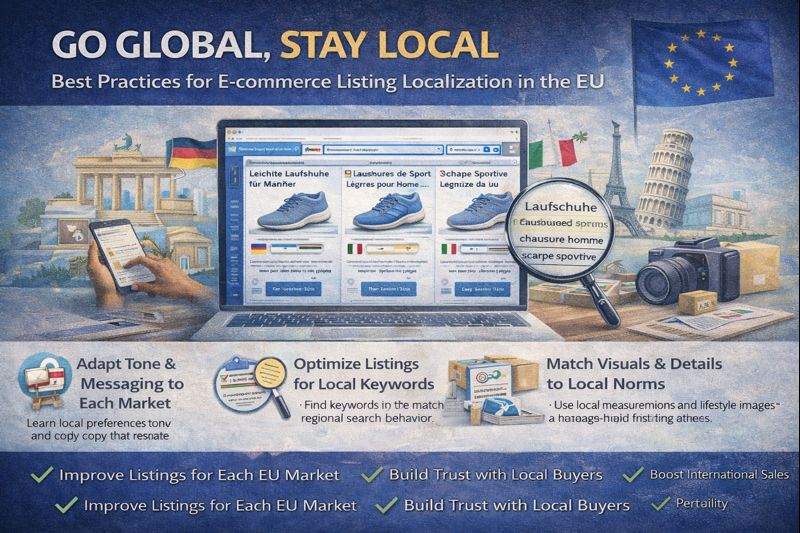
Expanding into Europe sounds like the natural next step for a growing e-commerce brand. The markets are strong, shoppers are digital-savvy, and the opportunity looks massive. But what many sellers discover quickly is that going global doesn’t mean going universal. The European marketplaces might share a continent, but they definitely don’t share the same buying habits, cultural cues, or even search behavior.
If you copy-paste your U.S. listings into Amazon Germany or France, don’t be surprised when sales stall. The issue isn’t your product — it’s your presentation. This is where E-commerce Localization becomes your best ally.
At Perfality, we’ve seen brands go from underperforming to outperforming just by localizing the way they speak to each market. The difference is subtle but powerful: you’re not just translating — you’re connecting.
Why localization matters more than translation
Translation is about changing words. Localization is about changing perspective. A product description that sounds persuasive in English can come off flat, awkward, or even confusing when directly translated.
For example, a “cozy blanket” in English might translate correctly into German, but local shoppers might search for terms related to warmth, design, or material quality instead. Without that insight, your listing misses the mark on SEO and emotional tone.
Localization adjusts the content — from product titles to A+ visuals — so it fits how people in that region actually shop, read, and decide.
1. Adapt tone and phrasing to the culture
Every EU market has its own rhythm. German listings lean toward precision and detail. French shoppers appreciate emotion and brand story. Spanish and Italian audiences often respond better to warmth and personality.
A one-size-fits-all approach won’t cut it. Before launching, invest time in learning what tone works in each country — or work with teams who already know. When your content feels like it was written for that market (not just translated for it), conversion rates climb.
2. Think in search behavior, not just language
Keyword translation is one of the biggest traps in Content Translation. Search intent shifts between countries, even if the products are identical.
For instance, shoppers in Italy might type “scarpe sportive” for sneakers, while Germans might look for “Laufschuhe.” Both mean the same thing, but Amazon treats them as different search terms. Missing the right keyword means missing traffic.
Local keyword research should be part of every localization plan — not an afterthought.
3. Match visuals and details to local norms
Images speak louder than text, especially across languages. But visuals also carry cultural expectations. A lifestyle photo that works for the U.K. might not feel relatable in Spain or Poland. Even something as simple as showing measurements in centimeters instead of inches matters more than most brands realize.
Good photos and honest details do more than make a listing look nice — they make it real.
When shoppers see measurements they recognize, packaging that looks familiar, and images that reflect how they actually use the product, they trust what they’re buying. That’s what separates a listing that just looks translated from one that feels genuinely local.
4. Keep your listings compliant — every country plays by its own rules
Once your content looks right, don’t forget the paperwork behind it. Every European marketplace has its own set of compliance requirements — and Amazon enforces them closely.
What’s fine on Amazon U.S. might get flagged immediately in France or Germany if certain information is missing.
For instance, in France, you’re required to show eco-participation details on certain products. In Germany, electronics and anything with chemicals usually need WEEE or REACH documentation before they can go live.
It’s not the most exciting part of expansion, but it’s one of the most important. Taking a little extra time to double-check your packaging, product data, and certifications before launch can save you from the headache of listings being pulled down later.
Final thought
Expanding across Europe isn’t about changing your product — it’s about speaking your customer’s language, literally and culturally. Great E-commerce Localization makes your listings feel native, your brand credible, and your message clear.
At Perfality, we help brands bridge that gap. From Content Translation and keyword research to marketplace compliance and creative optimization, our goal is simple: make your listings perform like they were built for each market — because that’s what European buyers expect.
Go global, but stay local — that’s how international e-commerce really grows.