



- Perfality
- May 7, 2026
- 11:15 am
- Read Time: 5 mintues
A lot of sellers assume listing optimization means changing a title, adding a few keywords, and hoping sales improve.
But anyone who has worked inside e-commerce long enough knows it usually goes deeper than that.
When a listing underperforms, the issue is often not the product itself. It is the way the product is being presented. Customers may not understand what makes it valuable. They may not trust the page. They may leave with unanswered questions. In many cases, the sale is being lost before the product even gets a fair chance.
That is why “before and after” listing optimization results can be so dramatic.
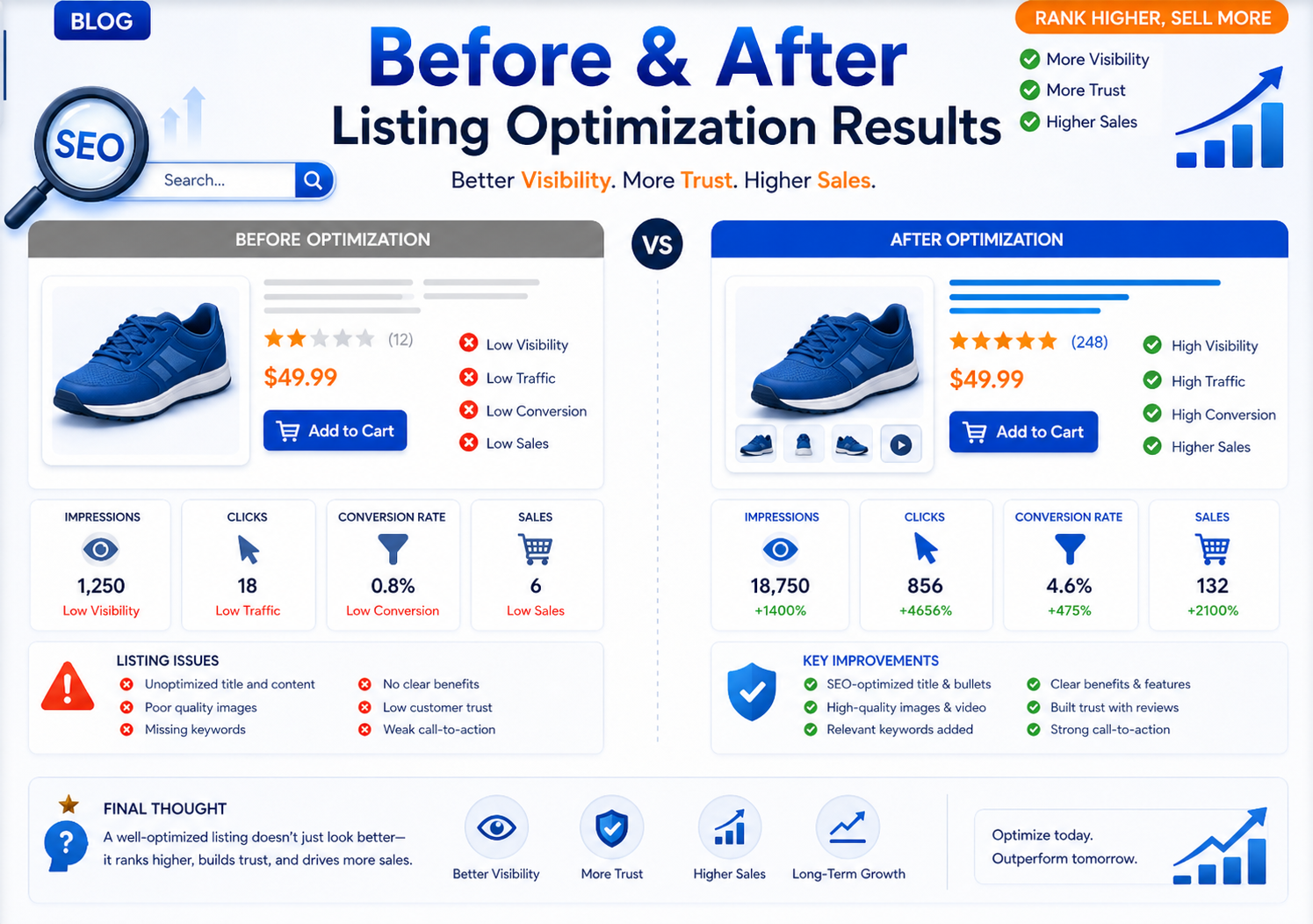
At Perfality, we have seen ordinary products become steady performers simply because the listing experience improved. Nothing changed in the warehouse. Nothing changed in manufacturing. The difference was clarity, trust, and better structure.
What a Weak Listing Usually Looks Like
Most poor-performing listings share common problems.
The title is overloaded with keywords and difficult to read. Product images are limited, outdated, or low quality. Bullet points focus on generic claims instead of real benefits. Descriptions are either empty or written without purpose. Important attributes are missing. Compatibility details are unclear. Customers arrive interested, but leave uncertain.
That uncertainty hurts everything.
Clicks stay low because the page does not look appealing. Conversion stays weak because the content does not answer doubts. Returns can rise because expectations were never clear in the first place.
From the seller side, it often feels like the product has no demand.
But in reality, demand may exist. The listing is just blocking it.
What Changes After Optimization
When a listing is properly optimized, the experience feels completely different.
The title becomes cleaner and easier to scan. Images describe the product faster than the words can ever do. You concentrate on what the purchaser is most concerned about in bullet points. Descriptions teach the customer about use cases and value. Backend attributes are corrected so the item appears in the right filters and search placements.
The product suddenly feels easier to buy.
That shift often creates measurable results. Click-through rates improve because the listing looks more trustworthy. Conversion improves because questions are answered earlier. Organic traffic can rise because relevance signals become stronger. Reviews may improve because the product now matches customer expectations more accurately.
A Realistic Example
Imagine a car phone mount selling on both Amazon and Walmart.
Before optimization, the title is cluttered, the first image is dull, and the bullets simply say things like “high quality” or “best design.” Compatibility is unclear. There are only two photos. Sales are inconsistent.
After optimization, the title clearly explains fit and use case. New images show dashboard placement, clamp strength, viewing angles, and compatible phone sizes. Bullet points explain stability, easy setup, and daily convenience. Backend data is updated with accurate dimensions and device compatibility.
The product itself has not changed.
But now the customer understands it instantly.
That is where performance changes usually begin.
Why Results Often Compound Over Time
Many sellers expect optimization to create overnight miracles. Improvements can sometimes happen fast, but more likely the gains accumulate time over time.
More traffic translates through higher click-through rates.
Better conversion rates can improve marketplace visibility. Better customer satisfaction can reduce returns and support stronger reviews.
Each small improvement supports the next one.
That is why listing optimization should not be viewed as a one-time cosmetic update. It is often the foundation for long-term growth.
How We Approach It at Perfality
At Perfality, we do not optimize listings by guessing.
We study where the friction is happening. Sometimes traffic is low, which points to visibility issues. Sometimes the traffic is great but conversions are low, indicating trust or clarity issues. High returns are sometimes accompanied by mismatched expectations. Once the real issue is clear, the optimization becomes much more effective.
That can include rewriting titles, improving content flow, refreshing images, correcting backend catalog data, strengthening brand presentation, or tailoring listings separately for Amazon and Walmart.
The Real Meaning of Before and After
When people hear “before and after,” they often think of dramatic screenshots or vanity metrics.
But the real transformation is simpler.
The product is less digestible, less credible, and easier to pass on pre-optimization. In the end, you have a product that becomes less mysterious, more credible and easier to opt for.
Clearly defined, credibly presented, choicely targeted with full of optimization.
Final Thought
Many products do not need to be reinvented.
They need to be presented better.
If your item has traffic but weak sales, or decent reviews but low momentum, the issue may not be the product at all. It may be the listing experience around it.
At Perfality, we have seen again and again that when a strong product finally gets a strong listing, performance often follows.
Sometimes the biggest growth opportunity is already in your catalog.