




- Perfality
- September 29, 2026
- 10:39 am
- Read Time: 10 mintues
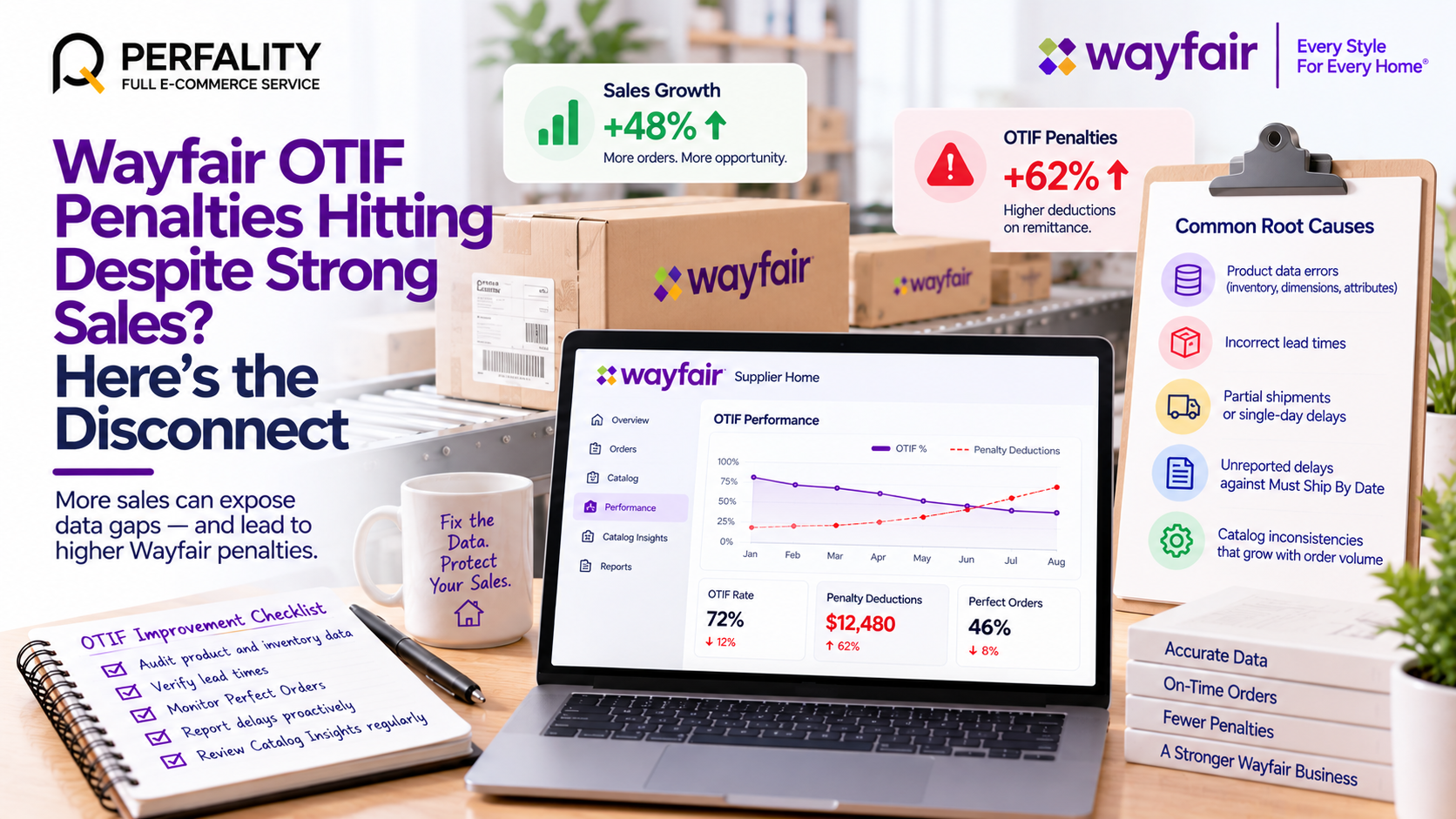
Sales are up meaningfully quarter over quarter, and so are the penalty deductions on the same remittance. Wayfair OTIF penalties — On-Time, In-Full, one of the platform’s most critical and most misunderstood performance metrics — often increase alongside genuine growth precisely because more order volume exposes existing data and process gaps faster than a smaller catalog ever would.
Understanding that most Wayfair penalties trace back to data errors rather than shipping performance itself changes where the fix actually needs to happen.
What Actually Drives Wayfair OTIF Penalties and Related Compliance Issues
- OTIF sensitivity: even a single-day delay or a partial shipment counts against the OTIF score — there’s no partial credit for a shipment that’s mostly on time and mostly complete.
- Uneven cancellation treatment: cancellations aren’t treated equally by cause, but the penalty still applies to the vendor account regardless of the underlying reason in many cases.
- Data errors, not shipping, as the primary driver: Wayfair’s own compliance guidance notes that most penalties don’t originate from shipping performance at all — they come from data errors that the system flags well before a supplier notices them independently.
- Perfect Orders threshold: falling below 40% Perfect Orders gives Wayfair grounds to suspend or permanently deactivate a supplier’s account entirely, making this one of the highest-stakes metrics on the platform.
Why Growth Specifically Makes This Worse
A supplier with modest order volume might have a data inconsistency sitting quietly in their catalog for months without meaningful consequence. As sales grow, that same inconsistency gets tested against far more purchase orders, and the penalty accumulation accelerates in direct proportion to the growth the supplier is otherwise celebrating. Without proactive account management specifically built around this pattern, strong sales simply magnify backend weaknesses rather than translating cleanly into reward.
How to Actually Reduce OTIF and Compliance Penalties
- Treat OTIF as a daily monitoring metric, not a monthly summary number, since a single-day delay has immediate consequences with no partial credit.
- Audit product and inventory data specifically — not just shipping processes — since most penalties originate from data errors rather than fulfillment execution itself.
- Report any unavoidable shipping delay against the Must Ship By Date proactively rather than letting it register as an unexplained miss.
- Monitor the Perfect Orders metric specifically given its account-suspension consequence, treating it as a leading indicator rather than a lagging one to react to.
How Perfality Approaches This
For Wayfair supplier accounts, compliance monitoring is built around the data-errors-first pattern documented across the platform, rather than assuming penalties always trace to shipping. That includes:
- Daily OTIF tracking: this metric is checked daily rather than monthly, given that a single delay or partial shipment counts immediately with no partial credit.
- Data-first penalty audits: when a penalty appears, product and inventory data get checked before assuming a shipping process failure, since data errors are the more common root cause.
- Proactive delay reporting: any shipment at risk of missing the Must Ship By Date gets reported to Wayfair ahead of time rather than registering as an unexplained miss.
- Perfect Orders as a leading indicator: this metric is tracked continuously given its direct link to account suspension risk, rather than reviewed only after a formal warning.
Related Services
If penalties are climbing alongside genuinely strong sales growth, that’s the documented pattern of growth exposing existing data gaps, not a sign that fulfillment itself has gotten worse. A team already auditing product and inventory data proactively tends to catch this before it compounds into a Perfect Orders problem.
Depending on how you’re searching, this kind of support is also known by these names:
- Full-service Amazon management: Full Service Amazon Management, Full Service Amazon Agency, Amazon Full Service Agency, Full Service Amazon Marketing Agency, Best Full-Service Amazon Agency, Best Full Service Amazon Agency
- FBA-focused support: Amazon FBA Management Agency, Amazon FBA Agency, Amazon FBA Marketing Agency, Amazon FBA Management Service
- Listing and content optimization: Amazon Listing Optimization Services, Amazon Listing Optimization Agency, Amazon Listing Optimization Service, Amazon Product Listing Optimization Service, Amazon Product Listing Optimisation Service, Amazon Product Listing Optimisation Service USA
- Product listing services: Amazon Product Listing Service, Amazon Product Listing Service Provider, Best Amazon Product Listing Service Agency
- PPC and advertising management: Amazon PPC Management Service, Amazon PPC Management Service Agency, Best Amazon PPC Management Service, PPC Management Service For Amazon
- Account management: Best Amazon Account Management Services, Amazon Ecommerce Company
Frequently Asked Questions
On-Time, In-Full — one of Wayfair’s most important supplier performance metrics. Even a single-day delay or a partial shipment counts fully against the score, with no partial credit.
Falling below 40% Perfect Orders gives Wayfair grounds to suspend or permanently deactivate a supplier’s account, making it one of the highest-stakes metrics to monitor.
Most penalties trace back to data errors rather than shipping performance. As order volume grows, existing data inconsistencies get tested against far more purchase orders, accelerating penalty accumulation in proportion to growth.
If this is a recurring pain point rather than a one-off, it’s usually worth a quick conversation. Book a free 30-minute call with our team and we’ll walk through what’s actually happening on your account.
Have any questions? Let’s connect!