




- Perfality
- March 25, 2026
- 11:00 am
- Read Time: 5 mintues
Selling pet products online might seem straightforward — a few cute photos, a catchy title, and you’re done. But if you’ve ever tried listing on Chewy, Petco, or PetSmart, you know how quickly that illusion disappears. Each of these platforms has its own detailed rules about how content should look, sound, and perform. Miss one small detail, and your listing can sit unpublished for weeks.
At Perfality, we’ve helped pet brands navigate these systems up close, and one thing is clear: succeeding in Pet E-commerce isn’t just about what you sell — it’s about how well you adapt your content to fit each retailer’s expectations.
1. Chewy: Emotion-driven content with a caring tone
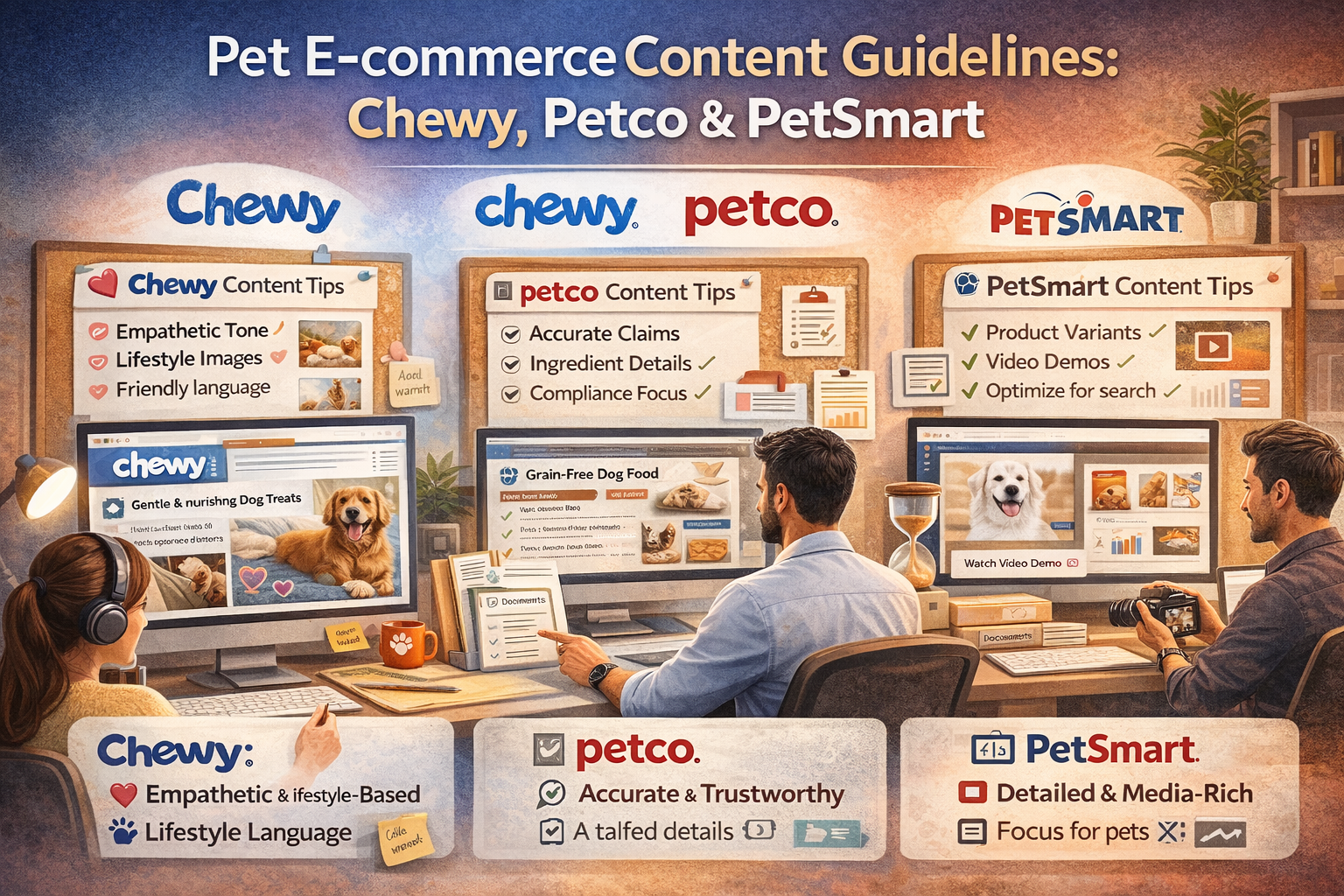
Chewy built its reputation on empathy — its entire brand voice revolves around the relationship between pet and owner. That tone has to come through in product content.
Descriptions on Chewy aren’t just technical; they’re emotional. Words like “gentle,” “nourishing,” or “comforting” do better than “effective” or “durable.” Listings that talk about “your dog’s comfort” or “your cat’s favorite new spot” resonate because they sound like a friend’s recommendation, not a spec sheet.
Chewy also loves storytelling imagery. Clean product photos are important, but lifestyle images — pets actually using the product — consistently perform better. And unlike Amazon, where SEO density dominates, Chewy’s focus is clarity and trust. A warm tone paired with accurate information is the winning formula.
2. Petco: Balanced between education and compliance
Petco operates more like a traditional retailer with a strong e-commerce backbone. Their Retailer Content Standards are strict because of how closely they tie to health, wellness, and safety. Any claim — “grain-free,” “vet-approved,” “hypoallergenic” — needs documentation to back it up.
At Petco, accuracy matters more than hype. Their customers want clear, factual details — what’s in the product, how it’s made, and how to use it. Listings that explain things simply perform better. Petco’s team reviews content manually, so even small formatting issues can hold things up. The tone should sound informed and trustworthy, like advice from someone who really knows pets.
PetSmart takes a more data-driven approach. Every detail — from size and flavor to breed and nutrition info — has to match their internal format. If it doesn’t, your product can vanish from search. Visuals matter here, too. Listings with videos or comparison shots grab attention and convert better, especially when they fit naturally with in-store promotions.
PetSmart also rewards brands that contribute to its marketing ecosystem — things like video demos, product comparisons, and multi-angle imagery increase both visibility and conversion rates.
Winning across niche marketplaces
For brands trying to scale across Chewy, Petco, and PetSmart simultaneously, the hardest part isn’t creating new content — it’s customizing existing content for each marketplace’s tone, format, and standards.
A single SKU can have three slightly different product descriptions, image sets, and bullet structures depending on where it’s listed. It takes coordination, but it’s worth it — because pet owners are loyal, and when they trust your brand on one platform, that trust carries everywhere.
At Perfality, we help pet brands manage that complexity — from adapting tone and visuals to meeting every Retailer Content Standard. The goal isn’t just compliance; it’s connection.
Because in the pet category, you’re not selling to a shopper — you’re helping someone care for a family member. And when your content reflects that, every platform works in your favor.