




- Perfality
- September 22, 2026
- 5:18 pm
- Read Time: 10 mintues
A vendor relationship has been running smoothly for months, and then a review surfaces a noticeably lower rating with no single dramatic incident behind it. A Chewy vendor scorecard tracks operational fundamentals continuously — in-stock rate, on-time delivery, order accuracy — and a gradual drift on any of these, not a single failure, is usually what’s actually behind the change.
Because Chewy expects consistently high performance on these basics (roughly 98% in-stock, fast fulfillment), small ongoing gaps compound into a visible scorecard problem faster than vendors often expect.
What a Chewy Vendor Scorecard Actually Tracks
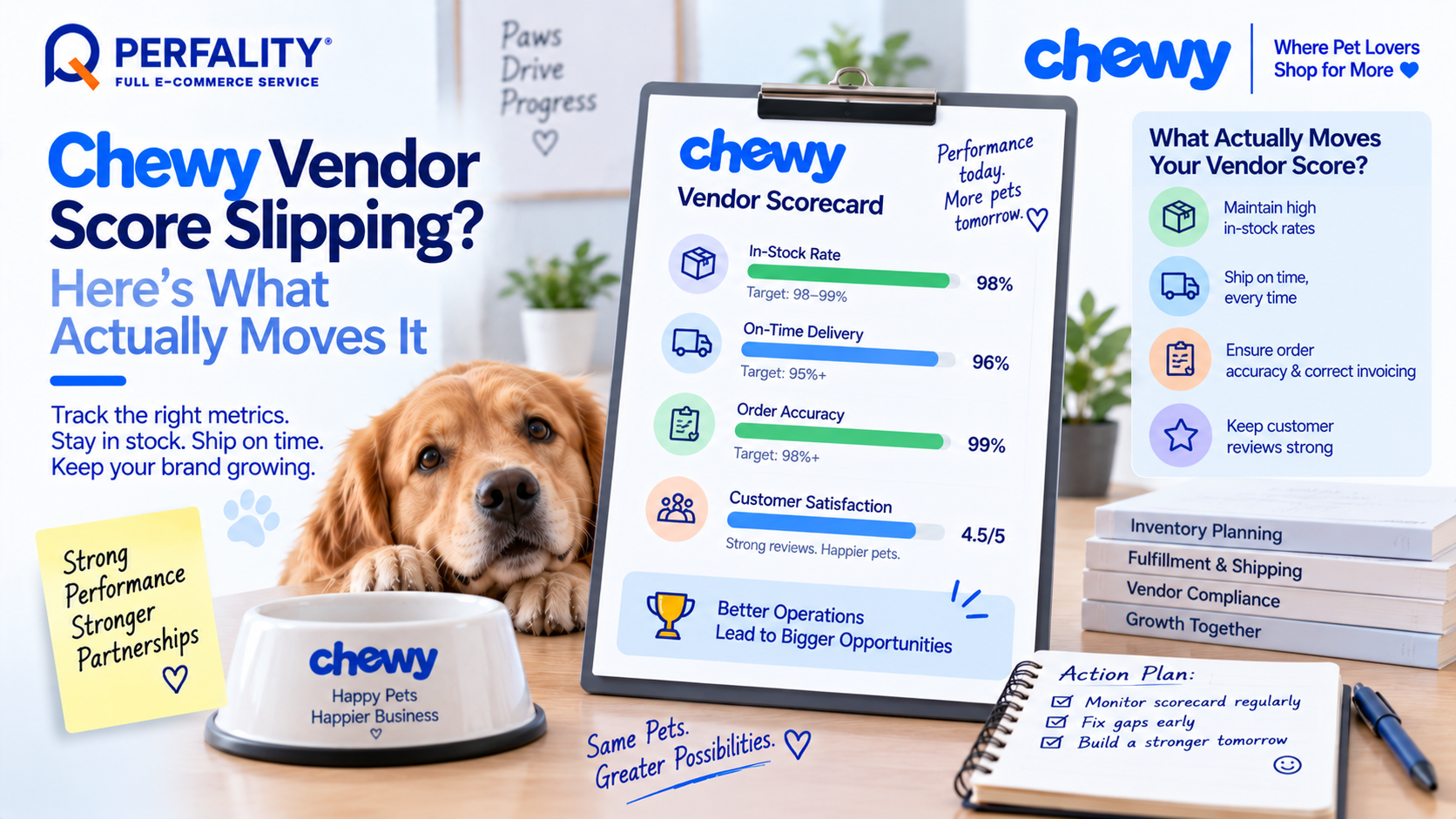
- In-stock rate: Chewy expects vendors to maintain roughly 98–99% in-stock rates, since selling out-of-stock items leads directly to cancellations.
- On-time delivery and fulfillment speed: Chewy’s fulfillment SLAs are demanding — often same-day pick, with 1–3 day transit for essentials like pet food and 1–5 days for non-essential, heavy, or specialized items.
- Order accuracy and invoicing: correct fulfillment of purchase orders and accurate, timely invoicing both factor into the ongoing performance picture.
- Customer satisfaction signals: review trends and complaint patterns feed into the broader vendor relationship alongside the harder operational metrics.
Why Scorecard Drops Often Feel Sudden When They Aren’t
In-stock rate and delivery speed rarely fail catastrophically overnight — they drift. A supplier delay here, an inventory sync gap there, and the cumulative effect only becomes visible once it crosses whatever threshold triggers a noticeable scorecard change. Because there’s often no single dramatic event to point to, the drift can go unnoticed until the review itself surfaces it.
How to Keep Scorecard Metrics Healthy
- Maintain real-time inventory sync between internal systems and Chewy’s platform, rather than relying on periodic manual updates that can lag behind actual stock levels.
- Build in buffer stock for products with variable demand, since a stockout risk is easier to prevent than to recover from once it’s already affected the in-stock metric.
- Use fast, reliable carriers and same-day picking wherever the SLA requires it, rather than treating fulfillment speed as a target to hit only when convenient.
- Set up a system to quickly cancel or adjust an order when a genuine supply gap makes fulfillment impossible, rather than letting a bad order sit and become a late shipment.
- Review the vendor scorecard on a regular cadence rather than only when a category manager raises a concern, so drift gets caught while it’s still small.
How Perfality Approaches This
For Chewy vendor accounts, scorecard metrics are monitored proactively on a fixed schedule rather than reviewed reactively after a drop. That includes:
- Real-time inventory sync verification: stock levels between internal systems and Chewy are checked for lag or mismatch regularly, not just when a stockout has already occurred.
- Buffer stock planning for variable-demand SKUs: products with seasonal or unpredictable demand carry a deliberate buffer to protect the in-stock rate specifically.
- Fulfillment SLA tracking by category: same-day pick and transit-time requirements are tracked separately for essential versus non-essential product categories, since Chewy’s expectations differ between them.
- Scheduled scorecard review: performance metrics are reviewed on a fixed weekly or biweekly cadence, catching gradual drift before it accumulates into a visible drop.
Related Services
If a vendor scorecard has dropped without an obvious single cause, in-stock rate and fulfillment speed are the first two metrics worth checking, since these tend to drift gradually rather than fail all at once. A team already reviewing these metrics on a fixed schedule tends to catch and correct the drift before it becomes a formal concern.
Depending on how you’re searching, this kind of support is also known by these names:
- Full-service Amazon management: Full Service Amazon Management, Full Service Amazon Agency, Amazon Full Service Agency, Full Service Amazon Marketing Agency, Best Full-Service Amazon Agency, Best Full Service Amazon Agency
- FBA-focused support: Amazon FBA Management Agency, Amazon FBA Agency, Amazon FBA Marketing Agency, Amazon FBA Management Service
- Listing and content optimization: Amazon Listing Optimization Services, Amazon Listing Optimization Agency, Amazon Listing Optimization Service, Amazon Product Listing Optimization Service, Amazon Product Listing Optimisation Service, Amazon Product Listing Optimisation Service USA
- Product listing services: Amazon Product Listing Service, Amazon Product Listing Service Provider, Best Amazon Product Listing Service Agency
- PPC and advertising management: Amazon PPC Management Service, Amazon PPC Management Service Agency, Best Amazon PPC Management Service, PPC Management Service For Amazon
- Account management: Best Amazon Account Management Services, Amazon Ecommerce Company
Frequently Asked Questions
Roughly 98–99%. Falling below this threshold increases the risk of cancellations and can affect the broader vendor performance picture.
Fulfillment expectations are demanding — often same-day picking, with 1–3 day transit for essentials like pet food and 1–5 days for non-essential, heavy, or specialized items.
Metrics like in-stock rate and delivery speed often drift gradually rather than fail suddenly, so the cumulative effect can go unnoticed until a formal review surfaces the change.
If this is a recurring pain point rather than a one-off, it’s usually worth a quick conversation. Book a free 30-minute call with our team and we’ll walk through what’s actually happening on your account.
Have any questions? Let’s connect!