



- Perfality
- September 22, 2026
- 5:51 pm
- Read Time: 10 mintues
A product that’s been listed for months disappears from a brand’s active Chewy assortment, with the explanation buried somewhere in category manager communication rather than a clear policy notice. A Chewy assortment review works through the Vendor Partner Portal’s assortment management tools, and because Chewy operates as a curated 1P vendor relationship rather than an open marketplace, the reasons a product gets dropped are usually performance-driven rather than a compliance violation.
Understanding this distinction changes the right response completely — a performance-based decline needs a different conversation than a policy dispute would.
How Chewy Assortment Review Decisions Actually Get Made
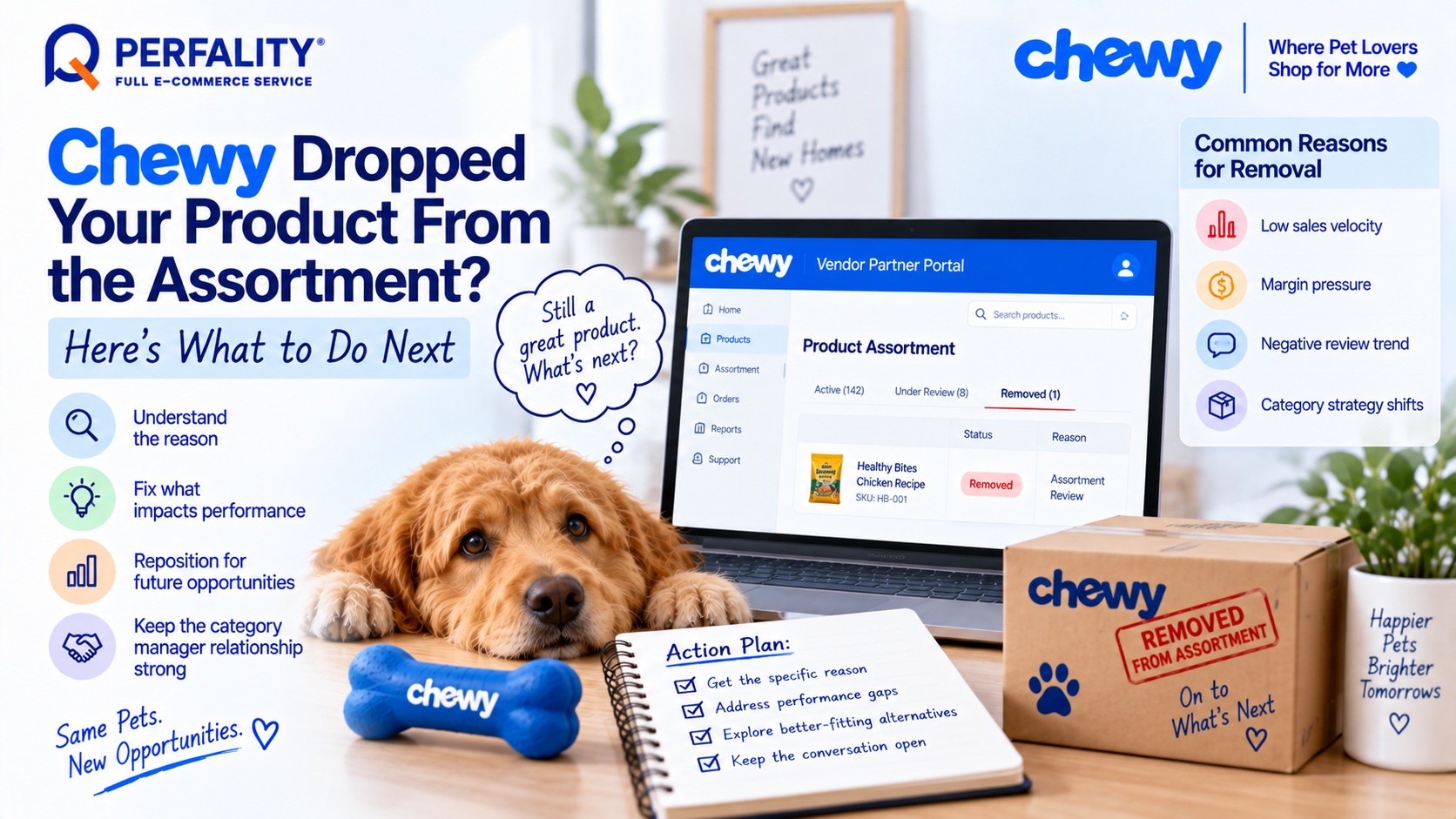
Category managers periodically propose assortment recommendations through the VPP, and vendors accept or decline items from that list — but the reverse also happens: Chewy can decide to discontinue a product already in the assortment based on sales velocity, margin, review trends, or category strategy shifts, communicated through the same portal and category manager relationship.
Because this is a curated vendor model rather than an open marketplace, there’s no formal appeals process in the way a marketplace policy suspension would have one. The conversation is relational — with the category manager — rather than procedural.
What Typically Drives a Product Out of the Assortment
- Weak or declining sales velocity relative to comparable products in the same category.
- Margin pressure, particularly if pricing negotiations or cost changes have made a product less attractive to continue carrying.
- A sustained negative review trend or quality complaints that affect the broader customer experience Chewy is trying to protect.
- Category strategy shifts — Chewy reprioritizing toward different product types, brands, or price points within a category.
How to Respond to an Assortment Change
- Ask the category manager directly for the specific reasoning behind the decision, rather than assuming it and reacting to the wrong cause.
- If the cause is performance-related (sales, reviews), address the underlying issue directly — improved content, pricing, or quality — before requesting reconsideration.
- If the cause is category strategy, consider whether a different product in the line might fit Chewy’s current direction better than the discontinued one.
- Maintain the vendor relationship professionally even through a decline, since category manager relationships are ongoing and future assortment opportunities depend on them.
How Perfality Approaches This
For Chewy vendor accounts, an assortment change is treated as a relationship and performance conversation, not a compliance dispute. That includes:
- Direct cause clarification: the category manager is asked directly for the specific reasoning behind a decline or discontinuation, rather than guessing at the cause.
- Performance-driven fixes before reconsideration requests: sales, review, or content issues get addressed concretely first, since asking Chewy to reconsider without a real change rarely succeeds.
- Portfolio-fit review: when a discontinuation is strategy-driven, the rest of the product line gets reviewed for a better-fitting alternative rather than treating the single decline in isolation.
- Relationship continuity: every interaction with the category manager is handled professionally, since the ongoing relationship — not a formal appeals process — is what shapes future assortment opportunities.
Related Services
If a product keeps facing assortment pressure, understanding whether the driver is performance, margin, or category strategy changes the entire response, since each needs a genuinely different fix. A team already managing the category manager relationship proactively tends to see these conversations coming well before a product actually gets dropped.
Depending on how you’re searching, this kind of support is also known by these names:
- Full-service Amazon management: Full Service Amazon Management, Full Service Amazon Agency, Amazon Full Service Agency, Full Service Amazon Marketing Agency, Best Full-Service Amazon Agency, Best Full Service Amazon Agency
- FBA-focused support: Amazon FBA Management Agency, Amazon FBA Agency, Amazon FBA Marketing Agency, Amazon FBA Management Service
- Listing and content optimization: Amazon Listing Optimization Services, Amazon Listing Optimization Agency, Amazon Listing Optimization Service, Amazon Product Listing Optimization Service, Amazon Product Listing Optimisation Service, Amazon Product Listing Optimisation Service USA
- Product listing services: Amazon Product Listing Service, Amazon Product Listing Service Provider, Best Amazon Product Listing Service Agency
- PPC and advertising management: Amazon PPC Management Service, Amazon PPC Management Service Agency, Best Amazon PPC Management Service, PPC Management Service For Amazon
- Account management: Best Amazon Account Management Services, Amazon Ecommerce Company
Frequently Asked Questions
Not in the way a marketplace policy suspension would. Chewy’s vendor model is relationship-based through category managers, so the path forward is a direct conversation about the reasoning rather than a formal appeal.
Assortment decisions are often performance-driven — weak sales velocity, margin pressure, a negative review trend, or a shift in category strategy — rather than tied to a compliance violation.
Through the Vendor Partner Portal and direct communication from the category manager, who also handles assortment recommendations and acceptance or decline decisions for new products.
If this is a recurring pain point rather than a one-off, it’s usually worth a quick conversation. Book a free 30-minute call with our team and we’ll walk through what’s actually happening on your account.
Have any questions? Let’s connect!