




- Perfality
- September 22, 2026
- 6:17 pm
- Read Time: 10 mintues
A catalog upload through Partner Home completes without an obvious failure, and weeks later a pattern of cancellations and pricing disputes traces back to that same batch. Wayfair item setup errors are rarely dramatic at the point of entry — a wrong dimension, a mismatched unit, an outdated lead time — but Wayfair’s system flags these inconsistencies against live order data long after the upload itself looked clean.
Because Wayfair operates primarily as a dropship marketplace, a data error at setup doesn’t just affect how a listing looks — it directly determines what happens when a real purchase order gets sent to a supplier’s warehouse.
Where Wayfair Item Setup Errors Actually Originate
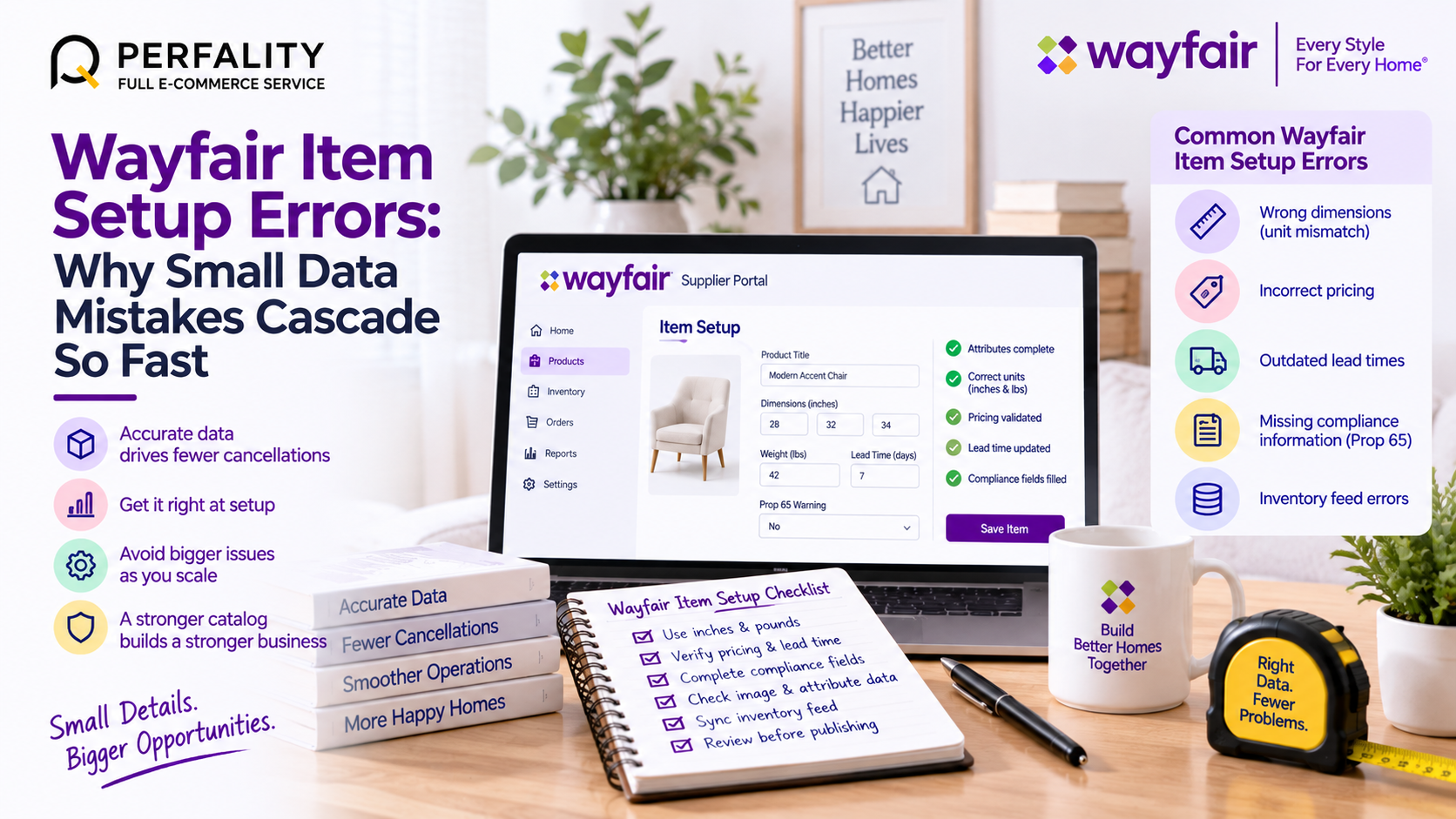
- Unit mismatches: Wayfair expects product dimensions in inches and weight in pounds specifically — a catalog built around metric units elsewhere and converted carelessly is a common, quiet source of downstream shipping and pricing problems.
- Missing or incorrect compliance fields: California’s Proposition 65 warning field, for instance, needs an explicit “Yes” or “No” rather than being left blank, and an incomplete field can hold up review.
- Outdated lead times: a lead time that doesn’t reflect actual current fulfillment capacity leads directly to missed ship dates once real orders start flowing.
- Inventory feed lag: infrequent inventory feed updates or feed data mistakes are a leading cause of inaccurate listings, and Wayfair customers are roughly four times more likely to cancel an order tied to an inaccurate listing than baseline.
Why Growth Makes This Worse, Not Better
A small supplier with a handful of SKUs might absorb an occasional dimension error without much consequence. As catalog volume and order velocity grow, the same category of small data mistakes gets exposed far faster, since more purchase orders are flowing against the same flawed data every day. This is a documented, somewhat counterintuitive pattern: strong sales growth on Wayfair often surfaces backend data problems that had been sitting quietly in a smaller catalog, rather than growth simply rewarding good performance outright.
How to Prevent Item Setup Errors From Compounding
- Standardize on inches and pounds at the source system level, rather than converting units manually at the point of Wayfair upload.
- Complete every compliance field explicitly, including Prop 65, rather than leaving ambiguous fields blank and hoping they don’t block review.
- Review and update lead times on a fixed schedule tied to actual current fulfillment capacity, not a one-time setup value that never gets revisited.
- Sync inventory feeds in real time or as close to it as possible, since feed lag is one of the most common and preventable causes of the cancellations that hurt broader account performance.
How Perfality Approaches This
For Wayfair supplier accounts, item setup is treated as a data-quality discipline rather than a one-time upload task. That includes:
- Unit standardization at the source: internal systems are aligned to inches and pounds before any Wayfair upload, eliminating manual conversion errors.
- Compliance-field completeness checks: every required field, including Prop 65, is verified explicitly filled before submission, not left ambiguous.
- Scheduled lead-time reviews: fulfillment lead times are checked against actual current capacity on a fixed cadence rather than left as a static setup value.
- Real-time inventory feed monitoring: feed sync frequency and accuracy are actively monitored, since this single factor drives a disproportionate share of avoidable cancellations.
Related Services
If item setup errors keep surfacing as catalog volume grows, that’s usually a sign the underlying data process needs standardizing at the source, not a series of one-off corrections after each error appears. Whether that means a partner managing Wayfair catalog data end to end or a second set of eyes on an existing feed process, this is exactly the kind of operational gap worth closing before growth exposes it further.
Depending on how you’re searching, this kind of support is also known by these names:
- Full-service Amazon management: Full Service Amazon Management, Full Service Amazon Agency, Amazon Full Service Agency, Full Service Amazon Marketing Agency, Best Full-Service Amazon Agency, Best Full Service Amazon Agency
- FBA-focused support: Amazon FBA Management Agency, Amazon FBA Agency, Amazon FBA Marketing Agency, Amazon FBA Management Service
- Listing and content optimization: Amazon Listing Optimization Services, Amazon Listing Optimization Agency, Amazon Listing Optimization Service, Amazon Product Listing Optimization Service, Amazon Product Listing Optimisation Service, Amazon Product Listing Optimisation Service USA
- Product listing services: Amazon Product Listing Service, Amazon Product Listing Service Provider, Best Amazon Product Listing Service Agency
- PPC and advertising management: Amazon PPC Management Service, Amazon PPC Management Service Agency, Best Amazon PPC Management Service, PPC Management Service For Amazon
- Account management: Best Amazon Account Management Services, Amazon Ecommerce Company
Frequently Asked Questions
Inches for dimensions and pounds for weight. Catalog data built around metric units elsewhere needs to be converted carefully before upload, since mismatches are a common, quiet source of downstream errors.
Many errors, like inventory feed lag or an outdated lead time, don’t block the initial upload — they only surface once real purchase orders start flowing against the flawed data, which can be weeks after the original catalog entry.
Not automatically — it often does the opposite. Higher order volume exposes existing data quality gaps faster, since more purchase orders are hitting the same flawed data every day.
If this is a recurring pain point rather than a one-off, it’s usually worth a quick conversation. Book a free 30-minute call with our team and we’ll walk through what’s actually happening on your account.
Have any questions? Let’s connect!