




- Perfality
- September 28, 2026
- 11:00 am
- Read Time: 10 mintues
Amazon NCX rate vs ODR is one of the most common points of confusion in account health conversations. Sellers assume the two metrics track the same thing in different dashboards, then get caught off guard when one flags a problem the other never showed. They measure different parts of the buyer experience, and both deserve a place on your weekly review.
What Is Amazon NCX Rate vs ODR, In Plain Terms?
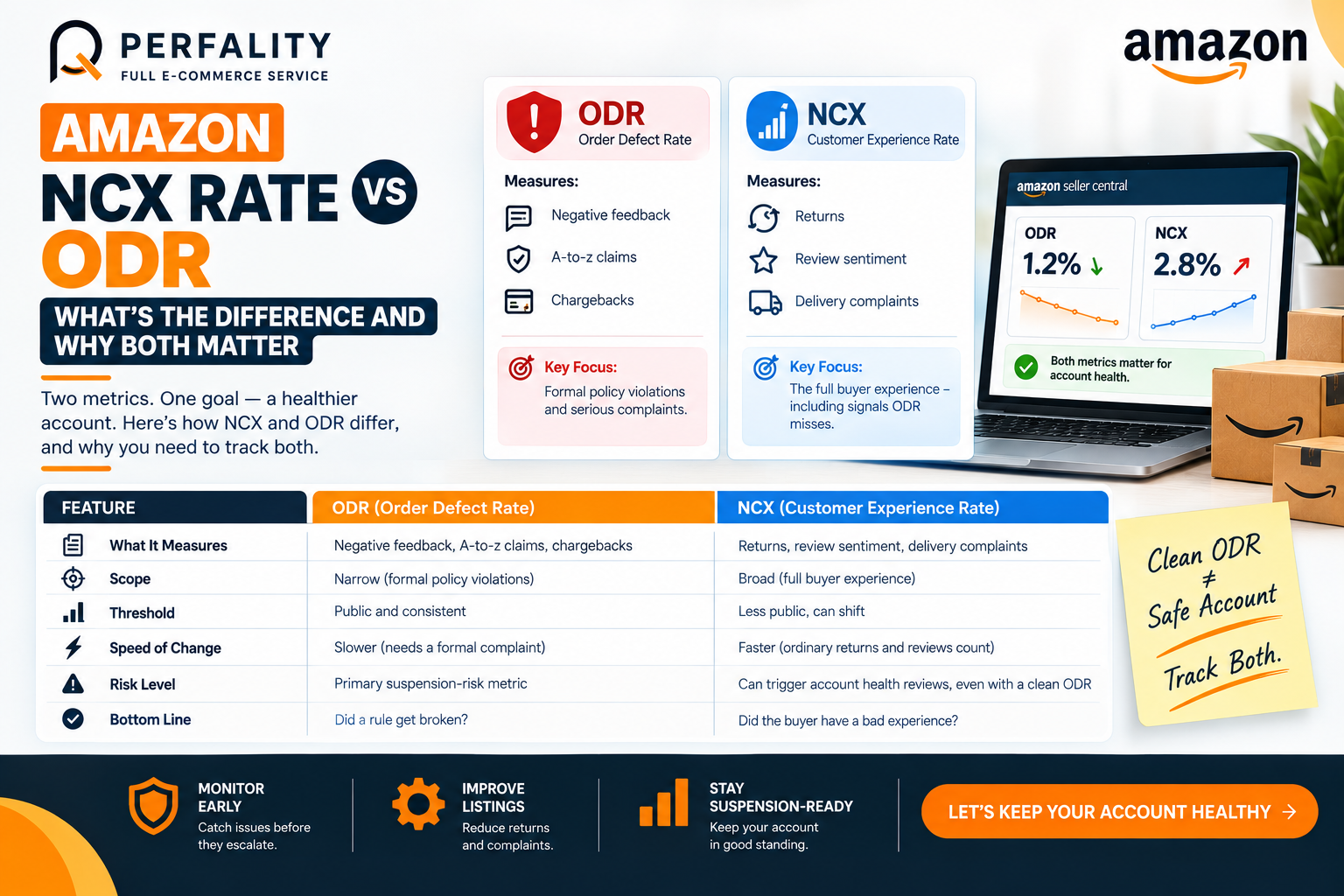
Order Defect Rate counts a narrow set of formal policy violations: negative feedback, A-to-z claims, and chargebacks, each weighted against total orders. The Amazon NCX rate casts a much wider net, pulling in returns, review sentiment, and delivery complaints that never rise to a formal claim. Put simply, ODR asks “did a rule get broken,” while NCX asks “did the buyer have a bad experience.”
What Order Defect Rate Actually Measures
ODR has stayed the primary suspension-risk metric for years because it is narrow and predictable. A seller can calculate it manually with three inputs and a simple formula, and Amazon’s threshold for staying in good standing is public and consistent.
What the Amazon NCX Rate Adds On Top
The NCX rate covers signals ODR was never designed to catch. A buyer who quietly returns a mis-sized item, or leaves a three-star review citing a fit issue, never touches ODR, but both count toward NCX. This is why a seller with a clean ODR can still see account health warnings tied to a rising NCX score.
Amazon NCX Rate vs ODR: Side-by-Side Comparison
- ODR counts formal claims and negative feedback; NCX counts a much broader set of buyer signals
- ODR has a long-published suspension threshold; NCX thresholds are less publicly documented and can shift
- ODR moves slowly, since it needs a formal complaint; NCX can move faster because ordinary returns count too
- ODR is largely reactive; NCX often reflects problems while they are still small
- Both roll up into the same account health dashboard and both matter for staying in good standing
Why Sellers Get Blindsided When They Only Watch ODR
A seller optimizing solely for ODR can hit every published target and still watch their account health score slide, because NCX is quietly absorbing complaints ODR was never built to track. By the time ODR reacts, the underlying problem, whether it is a bad supplier batch or a misleading listing, has usually been live for weeks.
How to Track Both Metrics Without Doubling Your Work
Most of the fixes that lower NCX also protect ODR, since both respond to the same root causes: accurate listings, solid FBA prep, and fast claim response. A recent catalog optimization review is usually the fastest way to see both metrics improve at once. Reviewing both together each week, rather than as separate reports, makes it easier to spot which lever actually needs attention.
Where a Full Service Agency Helps Track Both
Watching two overlapping metrics manually, across every ASIN, is exactly the kind of work an Amazon FBA management agency is built to absorb. An Amazon FBA agency that reviews ODR and NCX together, rather than in separate silos, catches the buyer complaints that would otherwise slip past a seller checking only one dashboard. Some brands prefer working through an Amazon FBA marketing agency instead, particularly when ad targeting is part of what is driving the wrong kind of traffic.
The best Amazon account management services report ODR and NCX side by side, not as an afterthought. A full service Amazon agency, sometimes marketed as an Amazon full service agency, should be reviewing listing accuracy and claim response together as one workflow. An Amazon ecommerce company delivering full service Amazon management understands that an Amazon FBA management service handling only shipments will always miss the review-sentiment half of the NCX equation.
This is also where Amazon listing optimization services and Amazon PPC management service work matter, since both influence buyer expectations before an order ever ships. An Amazon listing optimization agency, or a dedicated Amazon product listing optimization service, tightens the gap between what a listing promises and what a customer receives, which is the single biggest lever for both ODR and NCX at once. An Amazon Listing Optimization Service that reviews copy quarterly, not just at launch, keeps pace as buyer expectations shift.
Sellers evaluating a best full-service Amazon agency, a best full service Amazon agency, or a full service Amazon marketing agency should ask each one directly how they separate ODR reporting from NCX reporting, since a provider that conflates the two is likely missing signals from one or the other. The best Amazon PPC management service coordinates with whoever owns the Amazon product listing service, since a PPC management service for Amazon sending traffic to the wrong buyer segment inflates both metrics at once. Whether structured as an Amazon PPC management service agency or a standalone PPC engagement, campaign reviews should reference both scores.
For catalog-wide consistency, pairing an Amazon product listing service provider with the best Amazon product listing service agency keeps quality control even across every SKU, including newer listings that have not yet built up review history. Amazon Product Listing Optimisation Service USA-level standards, whether described as an Amazon Product Listing Optimisation Service or simply an Amazon Product Listing Service, should apply the same way to a five-SKU catalog as a five-hundred-SKU one.
Final Thoughts
Amazon NCX rate vs ODR is not a competition between two metrics; it is two lenses on the same buyer relationship. Sellers who track both together catch problems earlier and spend less time firefighting account health warnings after the fact.
If you are not sure how your ODR and NCX rate compare right now, book a free account health review and Perfality can pull both reports and show you exactly where the gap is.