




- Perfality
- September 29, 2026
- 10:16 am
- Read Time: 10 mintues
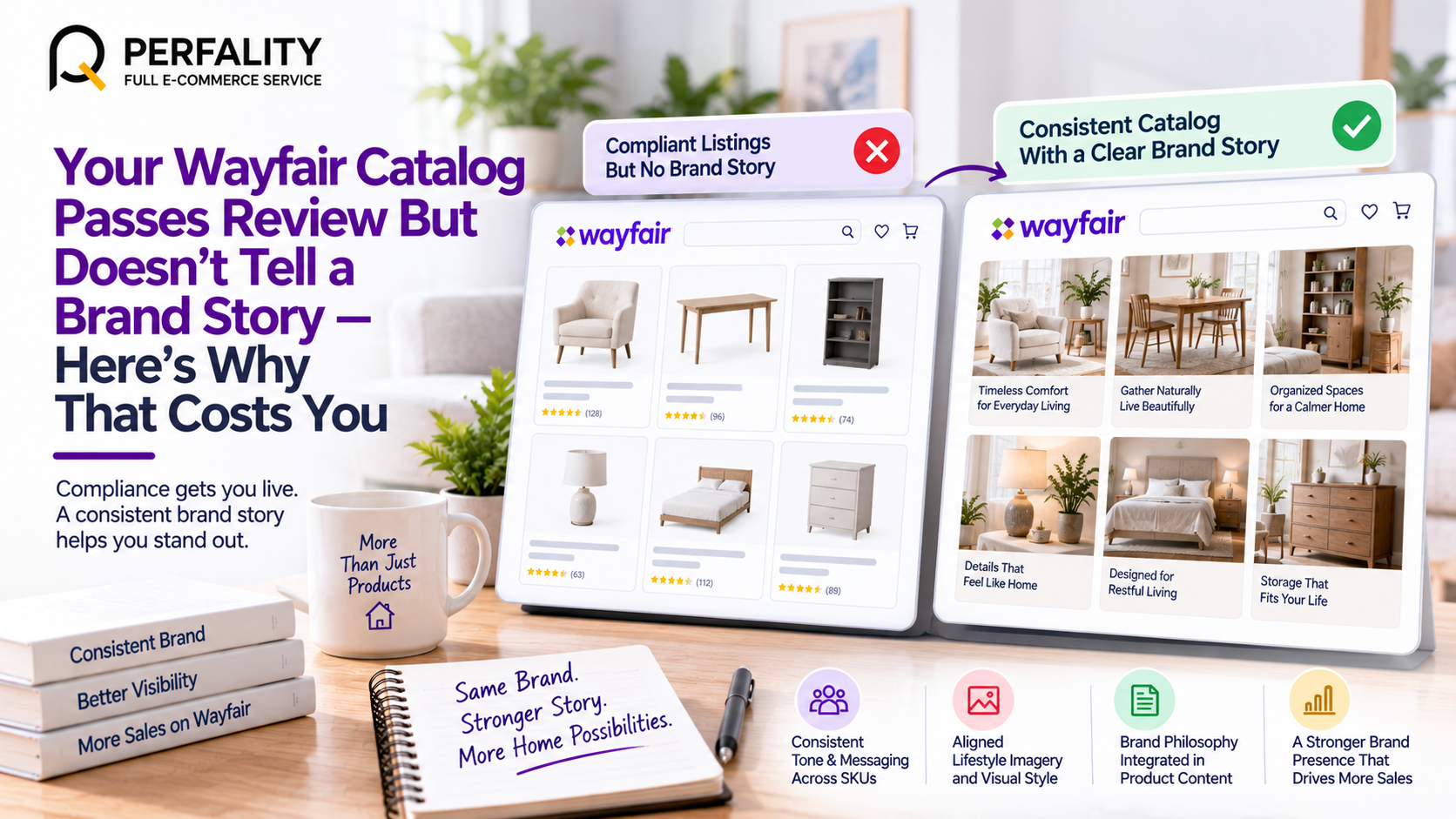
A catalog of dozens or hundreds of SKUs goes live, each one technically compliant, each one described accurately — and none of them read as coming from the same brand. Wayfair brand storytelling across an entire catalog, not just within a single listing, is one of the clearest differentiators between suppliers who treat Wayfair as a checklist and those who treat it as a real sales channel.
Because Wayfair sells 14 million items from more than 11,000 global suppliers, a shopper comparing similar products has little to go on beyond content and photography — and a catalog with no consistent voice or visual identity blends into that scale rather than standing out from it.
What Consistent Wayfair Brand Storytelling Actually Looks Like
- A consistent tone and vocabulary across every product description in the catalog, rather than copy that reads like it was written by a different person for each SKU.
- Recurring visual elements across gallery images — consistent lifestyle staging style, consistent color grading — that make a shopper browsing multiple products from the brand recognize the connection.
- A clear articulation of what the brand stands for (craftsmanship, sustainability, a specific design philosophy) woven naturally into descriptions rather than treated as a one-time About page.
- Content that’s refreshed regularly rather than written once at initial listing and left static as the catalog and competitive landscape evolve around it.
Why This Gets Skipped Even by Compliant Suppliers
Passing Wayfair’s review process is a real, sometimes time-consuming milestone, and it’s natural to treat that as the finish line for a given SKU. But compliance review checks technical requirements — image specs, required fields, category rules — not brand consistency across a catalog. A supplier can be fully compliant on every single listing and still present as a disconnected collection of products rather than a coherent brand, simply because nothing in the review process ever flags that gap.
How to Build Genuine Catalog-Wide Consistency
- Develop a documented tone and vocabulary guide before writing descriptions at scale, so multiple writers or contractors produce consistent-sounding content.
- Establish a consistent visual style for gallery lifestyle images specifically, since this is where brand personality has the most room to show up within Wayfair’s compliance rules.
- Weave brand philosophy into product descriptions naturally rather than isolating it to a separate, rarely-viewed section.
- Schedule a periodic content refresh across the catalog rather than treating initial listing copy as permanent.
How Perfality Approaches This
For Wayfair supplier catalogs, brand consistency is reviewed as its own dimension, separate from and after individual listing compliance. That includes:
- Tone and vocabulary documentation: a written style guide keeps description language consistent across the full catalog, regardless of how many people contribute content over time.
- Visual style consistency across galleries: lifestyle staging and color treatment are kept aligned across products, so a shopper browsing multiple SKUs recognizes the same brand.
- Philosophy-integrated copywriting: what makes the brand distinct gets worked naturally into individual product descriptions, not confined to a separate, easily-missed section.
- Scheduled catalog-wide content review: descriptions and imagery are revisited periodically across the full catalog, not just refreshed reactively on underperforming individual SKUs.
Related Services
If a Wayfair catalog is fully compliant but doesn’t feel like one connected brand across listings, that’s genuine, addressable upside — the fix is a documented style and visual approach, not a from-scratch content rebuild. A team that treats catalog-wide consistency as a distinct project tends to build it out faster than trying to retrofit it product by product.
Depending on how you’re searching, this kind of support is also known by these names:
- Full-service Amazon management: Full Service Amazon Management, Full Service Amazon Agency, Amazon Full Service Agency, Full Service Amazon Marketing Agency, Best Full-Service Amazon Agency, Best Full Service Amazon Agency
- FBA-focused support: Amazon FBA Management Agency, Amazon FBA Agency, Amazon FBA Marketing Agency, Amazon FBA Management Service
- Listing and content optimization: Amazon Listing Optimization Services, Amazon Listing Optimization Agency, Amazon Listing Optimization Service, Amazon Product Listing Optimization Service, Amazon Product Listing Optimisation Service, Amazon Product Listing Optimisation Service USA
- Product listing services: Amazon Product Listing Service, Amazon Product Listing Service Provider, Best Amazon Product Listing Service Agency
- PPC and advertising management: Amazon PPC Management Service, Amazon PPC Management Service Agency, Best Amazon PPC Management Service, PPC Management Service For Amazon
- Account management: Best Amazon Account Management Services, Amazon Ecommerce Company
Frequently Asked Questions
No. Compliance review checks technical requirements like image specs and required fields per listing — it doesn’t evaluate whether a catalog reads as one coherent, consistent brand across multiple products.
Primarily in gallery images, since the hero image is a strict compliance slot with no room for branding or lifestyle staging. Consistent visual style across gallery slots is where brand identity has real room to show up.
On a periodic schedule rather than left static after initial listing — both the competitive landscape and category-specific expectations evolve, and content that was strong at launch can become dated.
If this is a recurring pain point rather than a one-off, it’s usually worth a quick conversation. Book a free 30-minute call with our team and we’ll walk through what’s actually happening on your account.
Have any questions? Let’s connect!