



- Perfality
- September 22, 2026
- 5:08 pm
- Read Time: 10 mintues
A remittance comes through lower than expected, with several unfamiliar line items attached, and no advance notice was given. Chewy vendor deductions work exactly this way by design — each violation carries a fixed penalty applied automatically, with the dispute process happening after the deduction, not before it.
For pet brands specifically, where gross margins tend to run lower than in many other CPG categories, these deductions hit harder than they might elsewhere — which makes understanding and preventing them a genuine margin issue, not just an administrative annoyance.
The Most Common Sources of Chewy Vendor Deductions
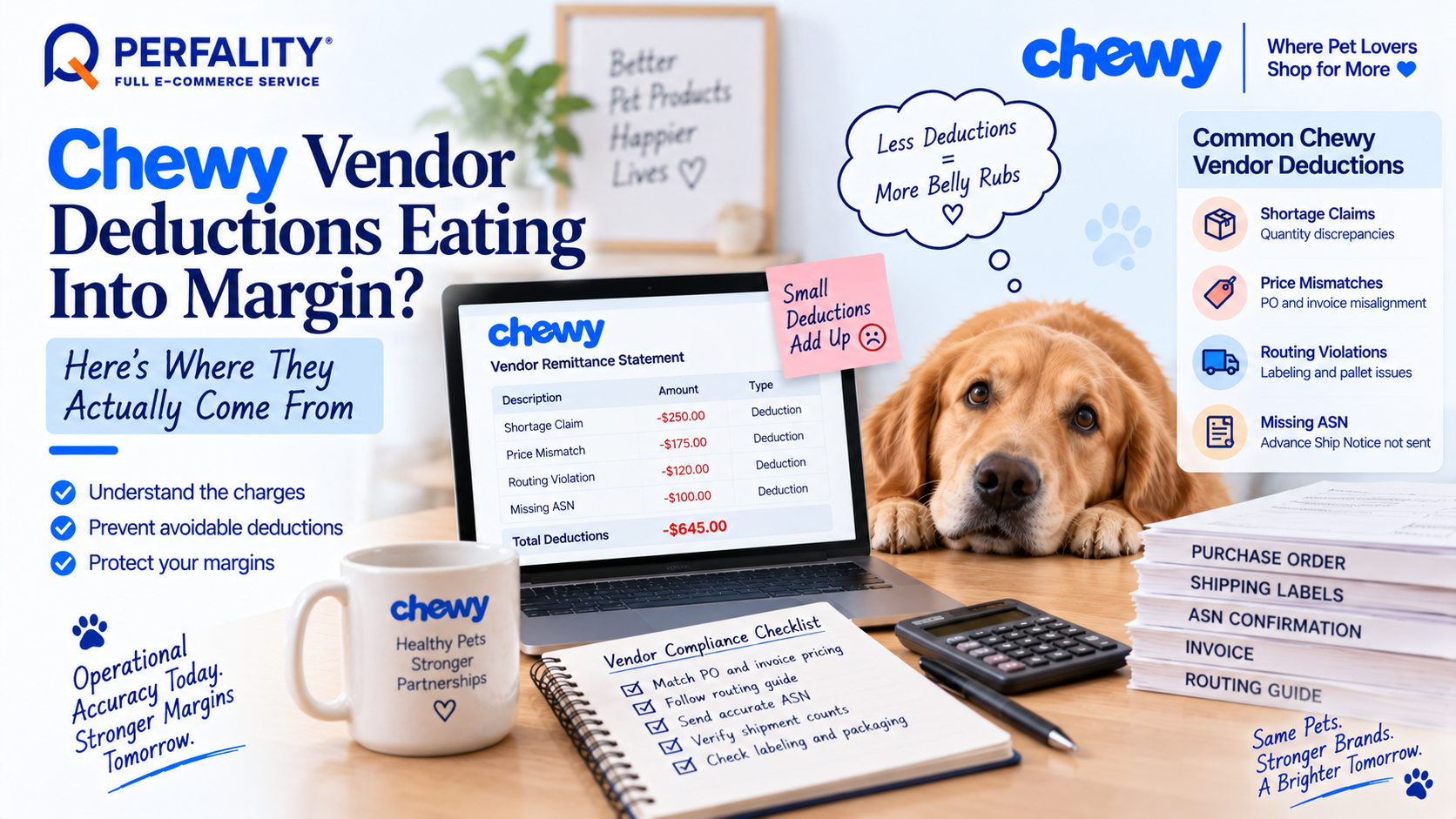
- Shortage claims: Chewy counts received units against the invoiced quantity, and a discrepancy triggers a claim — heavy items and multi-carton pallets see this more often due to weight shifts, miscounts, and receiving errors in transit.
- Price mismatches: a deduction applied when the purchase order price and the vendor’s invoice price don’t match, often stemming from an outdated PO or a pricing update that didn’t sync correctly on one side.
- Routing and label violations: shipments prepared outside Chewy’s routing guide specifications, including label errors and pallet violations.
- Missing ASN: an Advance Ship Notice that wasn’t sent or wasn’t accurate before the shipment arrived.
Why These Deductions Stack
These violation types aren’t mutually exclusive within a single shipment. A truck with label errors, a missing ASN, pallet violations, and a late arrival generates four separate deductions against the same remittance, none of which require advance notice before being applied. For a pet brand running at a lower gross margin than many other CPG categories, this stacking effect turns what looks like a handful of small administrative charges into a meaningful hit to operating income.
How to Actually Reduce Deductions
- Reconcile shipment counts carefully before dispatch, with extra attention to heavy items and multi-carton pallets where discrepancy risk is highest.
- Keep purchase order and invoice pricing synced in real time, since outdated pricing on either side is a common, avoidable trigger.
- Follow Chewy’s routing guide requirements exactly for labeling and pallet preparation on every shipment, not just the ones flagged as high-risk.
- Send accurate Advance Ship Notices before every shipment arrives, treating this as a non-negotiable step rather than an optional formality.
- Dispute incorrect deductions promptly with documentation, since the process runs deduct-first, dispute-after — a fast, well-documented dispute is the only way to recover a wrongly applied charge.
How Perfality Approaches This
For Chewy vendor accounts, deduction prevention is treated as a standing operational discipline, not a monthly reconciliation task. That includes:
- Pre-dispatch shipment audits: unit counts, pallet preparation, and labeling are checked against Chewy’s routing guide before every shipment leaves, specifically targeting heavy and multi-carton items.
- Real-time PO/invoice price syncing: pricing is kept aligned across both systems continuously, rather than reconciled only when a mismatch deduction already appears.
- ASN accuracy checks: every Advance Ship Notice is verified for accuracy before the corresponding shipment departs, closing off one of the most common and entirely avoidable deduction sources.
- Systematic dispute tracking: every deduction is logged and disputed with documentation on a consistent schedule, rather than left unaddressed because the individual charge seems too small to chase.
Related Services
If deductions are showing up on nearly every remittance, that’s usually a sign of a systemic gap in shipment prep or pricing sync, not a string of unrelated bad luck. A team already auditing shipments against Chewy’s routing guide before dispatch tends to prevent most of these charges rather than disputing them after the fact.
Depending on how you’re searching, this kind of support is also known by these names:
- Full-service Amazon management: Full Service Amazon Management, Full Service Amazon Agency, Amazon Full Service Agency, Full Service Amazon Marketing Agency, Best Full-Service Amazon Agency, Best Full Service Amazon Agency
- FBA-focused support: Amazon FBA Management Agency, Amazon FBA Agency, Amazon FBA Marketing Agency, Amazon FBA Management Service
- Listing and content optimization: Amazon Listing Optimization Services, Amazon Listing Optimization Agency, Amazon Listing Optimization Service, Amazon Product Listing Optimization Service, Amazon Product Listing Optimisation Service, Amazon Product Listing Optimisation Service USA
- Product listing services: Amazon Product Listing Service, Amazon Product Listing Service Provider, Best Amazon Product Listing Service Agency
- PPC and advertising management: Amazon PPC Management Service, Amazon PPC Management Service Agency, Best Amazon PPC Management Service, PPC Management Service For Amazon
- Account management: Best Amazon Account Management Services, Amazon Ecommerce Company
Frequently Asked Questions
No. Each violation carries a fixed penalty applied automatically, and the vendor disputes it afterward rather than being notified in advance.
Yes. A single shipment with label errors, a missing ASN, pallet violations, and a late arrival can generate four separate deductions against the same remittance.
Heavier items and multi-carton pallets see more weight shifts, carton miscounts, and receiving errors in transit, which increases the likelihood of a discrepancy between invoiced and received quantities.
If this is a recurring pain point rather than a one-off, it’s usually worth a quick conversation. Book a free 30-minute call with our team and we’ll walk through what’s actually happening on your account.
Have any questions? Let’s connect!