



- Perfality
- August 18, 2026
- 11:00 am
- Read Time: 5 mintues
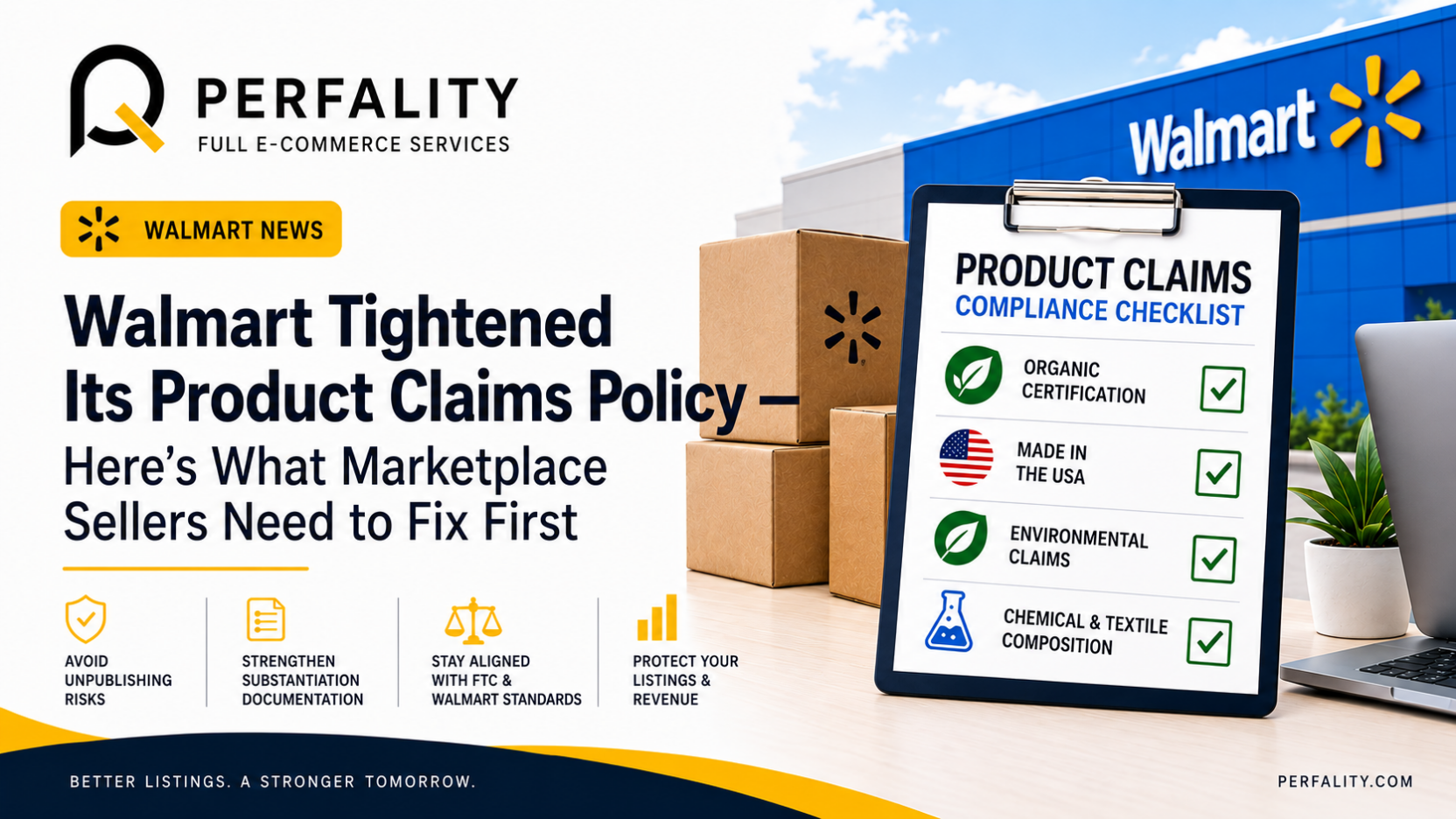
Walmart quietly rewrote the rules on what sellers can claim about their products. The updated Prohibited Products Policy on Marketplace Learn, last revised June 5, 2026, tightens substantiation requirements for organic certifications, “Made in the USA” claims, environmental marketing language, and textile or chemical composition claims — and non-compliant listings can be unpublished automatically.
It’s not framed as breaking news. There was no press release, no seller-summit announcement – just an updated guide sitting quietly in Walmart’s official Marketplace Learn resource. That’s exactly why it’s worth flagging: policy changes that don’t make headlines are the ones that catch sellers off guard when a listing disappears without warning.
What Changed
The updated policy covers several categories of product claims that sellers commonly use to differentiate their listings:
- General claims — organic certifications, third-party approvals, heritage claims, and material composition now require consistent, verifiable documentation
- “Made in the USA” claims — must be consistent across product images, packaging, and listing content, or the listing risks automatic unpublishing
- Environmental claims — products marketed as biodegradable or compostable face additional restrictions and stronger proof requirements
- Textile and chemical composition — apparel, household goods, and beauty products face closer scrutiny on fiber content and chemical disclosures
The policy affects multiple categories: apparel, household items, beauty, packaging, and anything marketed with an environmental or origin claim.
Why This Is Worth Sellers’ Attention
The “Made in USA” Consistency Trap
Most sellers don’t intentionally misrepresent origin claims — they just write listing copy, packaging text, and image callouts at different times, sometimes by different people. Walmart’s update specifically targets that inconsistency: if the product images say one thing and the bullet points say another, the listing can be flagged and unpublished automatically, with no manual review first.
Environmental Claims Under the Microscope
“Biodegradable” and “compostable” have become default marketing language for a huge range of packaging and household products — often without the certification to back it up. Walmart’s tightened stance mirrors a broader regulatory trend: the FTC has been increasingly active on unsubstantiated green claims, and Walmart appears to be getting ahead of that scrutiny rather than waiting for a complaint to force the issue.
What This Means for Sellers
This isn’t a policy sellers need to react to overnight, but it is one worth auditing proactively. A few practical steps:
- Pull every listing making an organic, “Made in USA,” biodegradable, or compostable claim into one review list
- Check that images, packaging text, and bullet copy all say the same thing — inconsistency is the fastest way to trigger an automatic unpublish
- Confirm you have the underlying certification or documentation on file, not just the claim itself
Review textile and chemical composition disclosures for apparel and household categories specifically
How Perfality Would Approach This
If a Walmart Marketplace seller came to Perfality with this policy update, the first move would be a listing-by-listing claims audit – cross-referencing every organic, origin, or environmental claim against the actual certification on file, not just what the copy says. That’s the same discipline we bring to content and design work across every marketplace: a claim that isn’t backed by documentation is a liability, not a selling point, no matter how good it reads on the page.
Why This Matters Beyond Walmart
Most brands we work with don’t sell on just one channel. A seller running a full service Amazon agency relationship with us for their Amazon FBA management agency needs and their Amazon listing optimization services is very often the same seller quietly exposed on Walmart, because the claims language that passed Amazon review five years ago was never re-checked against Walmart’s newer, stricter standard.
That’s the real risk in a policy update like this one: it doesn’t announce itself with a banner or an email blast, it just changes what “compliant” means. Brands treating Amazon and Walmart account management as one connected system — rather than two separate, unrelated storefronts — catch these gaps before a listing goes dark and revenue drops with it. An Amazon FBA marketing agency that only watches Amazon’s own announcements will miss a Walmart-only policy change like this one entirely, which is exactly why cross-platform account management earns its keep.
This is also why we built our practice around full service Amazon management rather than single-service listing tweaks. Whether a brand needs an Amazon FBA management service to keep inventory compliant, an Amazon PPC management service to protect margin while a policy shakeup plays out, or straightforward Amazon product listing service work to get claims language re-verified across every SKU, the same audit discipline applies across Amazon and Walmart alike.
Brands searching for the best Amazon account management services or a best full-service Amazon agency to close this kind of cross-platform gap tend to ask the same question: how do we know what we don’t know? The honest answer is a connected account team — one that treats Amazon full service agency work and Walmart marketplace management as one operation, not two vendors who never compare notes. That’s the model we run as an Amazon ecommerce company built to catch a Walmart-only policy shift before it costs a brand its best-selling SKU.
For sellers weighing a full service Amazon marketing agency against piecemeal freelance help, or comparing an Amazon PPC management service agency against handling ads in-house, the same principle holds: the best Amazon PPC management service isn’t the one with the lowest fee, it’s the one with visibility into every other channel a brand sells through. PPC management service for Amazon only protects half a seller’s revenue if the other half — Walmart, in this case — is running on stale compliance language.
Whether a brand needs an Amazon product listing service refresh, works with us as an Amazon product listing service provider on an ongoing basis, or wants the standards of a best Amazon product listing service agency applied across every SKU, the underlying habit is the same: audit before a policy forces the issue. We bring that same Amazon product listing optimisation service — including the Amazon product listing optimisation service USA sellers specifically ask for — to keeping claims language defensible everywhere a brand sells, not just on the platform making headlines this week.
It’s also why brands hire us as their Amazon FBA agency instead of only fixing symptoms one suspended listing at a time. Our Amazon listing optimization agency team treats every claim as a compliance question first and a conversion question second, because an Amazon product listing optimization service that ignores documentation is building on sand. Whether a brand needs Amazon listing optimization service work on a single flagged ASIN or wants the full weight of a best full service Amazon agency behind its entire catalog, the goal is the same: claims that hold up under scrutiny, on every platform, not just the one currently making news.
Not sure whether your Walmart or Amazon listings are still making claims that would have passed review two years ago but not today? Book a free strategy session with Perfality and we’ll run the audit with you.