




- Perfality
- October 6, 2026
- 10:00 am
- Read Time: 10 mintues
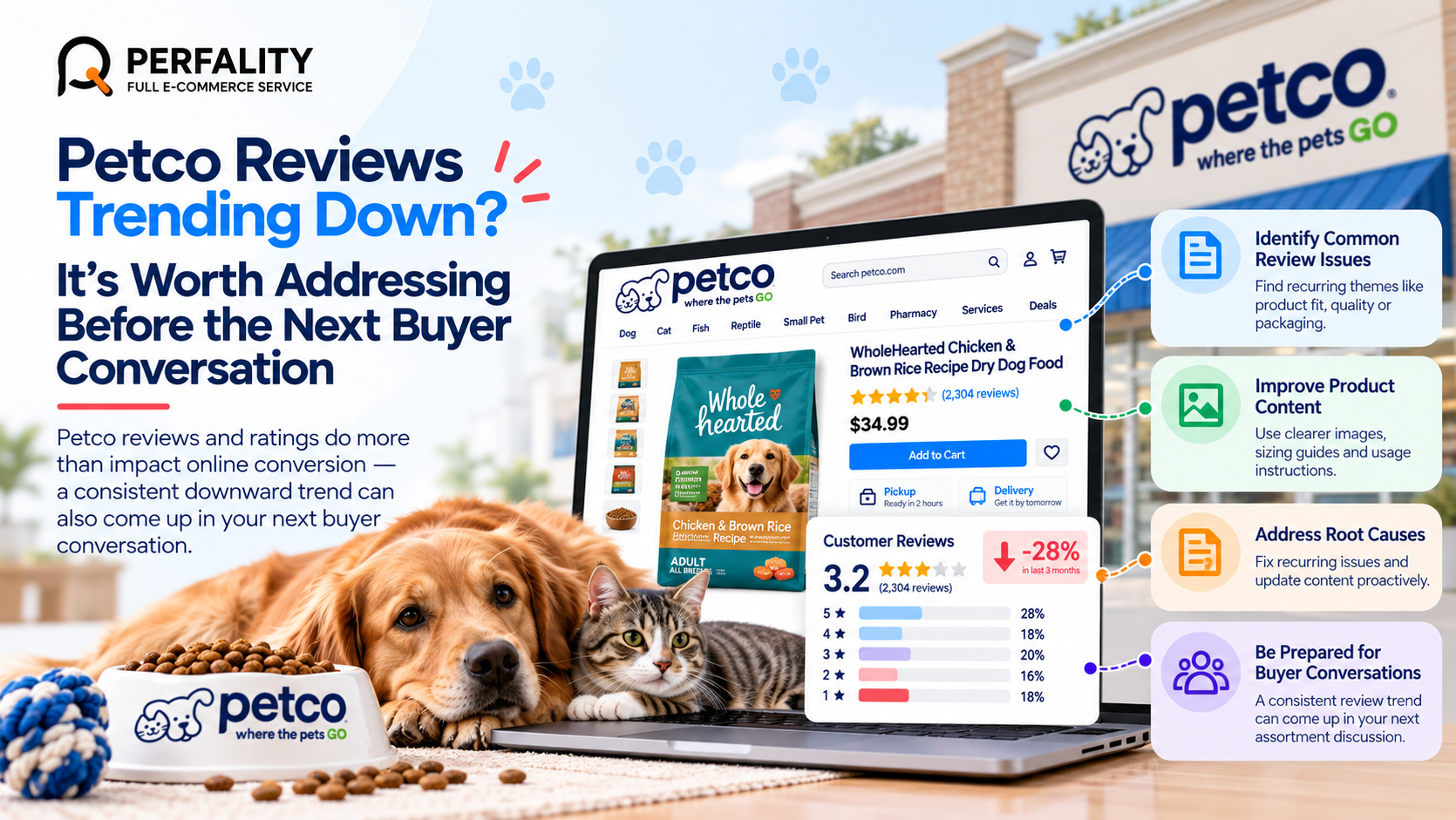
A product has been performing steadily in stores and online, but a pattern of similar complaints has been quietly building in the review section. Petco reviews ratings obviously shape what an online shopper decides, but because Petco vendor relationships run through ongoing category buyer conversations, a consistent negative pattern also tends to become part of the broader discussion about shelf space and continued distribution.
Treating reviews as purely an online marketing metric misses the half of the picture that plays out in the vendor relationship itself.
Why Petco Reviews Ratings Carry Weight Beyond the Page
Category buyers managing an omnichannel assortment — physical shelf space across 1,500+ stores plus Petco.com — are naturally attentive to signals about a product’s real-world performance, and online review trends are one of the most visible, easy-to-check signals available. A pattern of quality or fit complaints doesn’t need a formal review-based penalty system to become relevant; it’s simply part of the information a buyer has in front of them at the next planning or assortment conversation.
On the consumer side, reviews function the same way they do on any pet retail platform: they build (or undermine) the confidence a buyer needs to choose a product for their pet, particularly in categories like food, supplements, and health items where owners are making the decision on the animal’s behalf.
Common, Preventable Sources of Negative Reviews
Content that oversells fit or suitability — a size, formulation, or life-stage claim that doesn’t match the buyer’s actual experience — is one of the most common and entirely preventable causes. Missing usage or feeding guidance is another: a buyer confused about how to transition their pet to a new food, for instance, often expresses that confusion as a negative review rather than a resolved support question. Packaging or shipping damage, especially for fragile or liquid products, and batch-to-batch quality inconsistency round out the most frequent patterns.
How to Manage the Review Trend Proactively
- Read reviews for recurring themes rather than tracking only the star-rating average, since a theme points directly to a fixable cause.
- Align product content precisely with the actual customer experience, closing the gap between what’s promised and what’s delivered.
- Address recurring complaints through content updates — clearer sizing, better transition guidance — rather than treating each review as an isolated support ticket.
- Raise a declining review trend proactively with the category buyer rather than waiting for it to surface unprompted in a shelf-space or assortment conversation.
How Perfality Approaches This
For Petco vendor accounts, reviews are tracked as both a conversion signal and a buyer-relationship signal, not managed as two separate concerns. That includes:
- Pattern-based review analysis: reviews are read for recurring themes rather than reduced to a single star-rating number, since the theme is what points to an actual fix.
- Content-to-experience alignment checks: product claims are compared against what reviews actually describe, catching a mismatch before it accumulates into a broader pattern.
- Proactive buyer communication: a declining review trend is flagged and discussed with the category buyer directly, rather than left to surface unprompted at the next assortment review.
- Root-cause content fixes: recurring complaints get addressed through updated sizing, feeding, or usage content, treating the pattern as fixable rather than absorbing it as ongoing support load.
Related Services
If a review pattern keeps repeating on a Petco listing, aligning the product content with the actual buyer experience is usually the fastest fix, rather than waiting for the trend to resolve on its own. A team already reading reviews for patterns tends to catch and fix this before it becomes part of a broader assortment conversation with a category buyer.
Depending on how you’re searching, this kind of support is also known by these names:
- Full-service Amazon management: Full Service Amazon Management, Full Service Amazon Agency, Amazon Full Service Agency, Full Service Amazon Marketing Agency, Best Full-Service Amazon Agency, Best Full Service Amazon Agency
- FBA-focused support: Amazon FBA Management Agency, Amazon FBA Agency, Amazon FBA Marketing Agency, Amazon FBA Management Service
- Listing and content optimization: Amazon Listing Optimization Services, Amazon Listing Optimization Agency, Amazon Listing Optimization Service, Amazon Product Listing Optimization Service, Amazon Product Listing Optimisation Service, Amazon Product Listing Optimisation Service USA
- Product listing services: Amazon Product Listing Service, Amazon Product Listing Service Provider, Best Amazon Product Listing Service Agency
- PPC and advertising management: Amazon PPC Management Service, Amazon PPC Management Service Agency, Best Amazon PPC Management Service, PPC Management Service For Amazon
- Account management: Best Amazon Account Management Services, Amazon Ecommerce Company
Frequently Asked Questions
Not through a formal penalty system, but category buyers managing an omnichannel assortment do pay attention to review trends as one signal of a product’s real-world performance, and it can factor into broader assortment conversations.
A mismatch between product content and actual customer experience — oversold sizing or suitability claims, or missing usage guidance — tends to be more common than genuine product quality issues.
Not if it’s part of a pattern. A recurring complaint across several reviews usually points to a content or product fix, and addressing the root cause is more effective than resolving each instance individually.
If this is a recurring pain point rather than a one-off, it’s usually worth a quick conversation. Book a free 30-minute call with our team and we’ll walk through what’s actually happening on your account.
Have any questions? Let’s connect!