




- Perfality
- October 6, 2026
- 11:00 am
- Read Time: 10 mintues
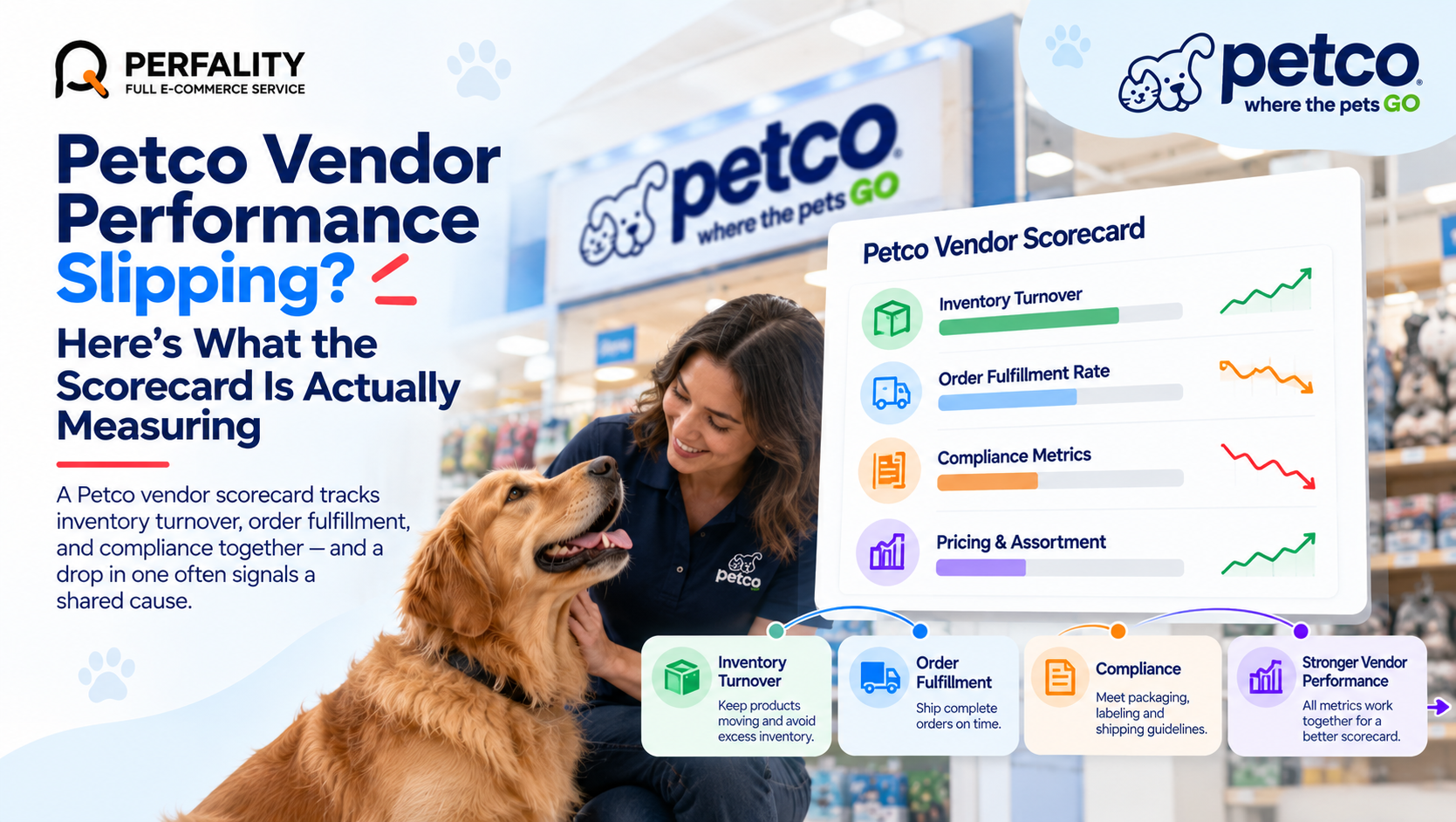
A vendor relationship has been stable for a long stretch, and then a routine review shows a noticeably weaker performance picture with no single dramatic failure behind it. A Petco vendor scorecard tracks inventory turnover, order fulfillment rates, and compliance metrics together through the vendor portal system, and because these metrics interact, a gradual decline in one often quietly drags the others down alongside it.
Understanding how these metrics relate to each other — rather than treating each as an isolated number — is what actually helps diagnose and fix a slipping scorecard.
What a Petco Vendor Scorecard Actually Tracks
- Inventory turnover: how efficiently a vendor’s products move through Petco’s distribution network relative to how much inventory sits committed at any given time.
- Order fulfillment rates: how consistently and completely purchase orders get fulfilled on time, which ties directly into retail shelf availability and Petco.com stock status.
- Compliance metrics: the same packaging, labeling, and shipping compliance data that also drives chargeback exposure feeds into the broader vendor performance picture.
- Data-driven insight expectations: Petco’s own vendor guidance points toward consistent product availability, competitive pricing, and quality standards as the pillars successful vendors maintain.
Why These Metrics Move Together
A fulfillment gap doesn’t just show up as a missed order — it also depresses inventory turnover (since unfulfilled demand means product sits unsold longer than it should) and can trigger compliance deductions if the fulfillment shortfall involves a shipping or routing shortcut taken under pressure. This is why a scorecard drop rarely traces back to one isolated cause: a single operational gap, like a supplier delay or a warehouse capacity issue, tends to ripple across two or three metrics simultaneously rather than affecting just one in isolation.
How to Keep Scorecard Metrics Healthy Together
- Treat inventory turnover and order fulfillment as connected metrics, since a fix to one (better demand forecasting, for instance) usually improves the other as a byproduct.
- Build enough buffer capacity into fulfillment operations that a shipping shortcut is never necessary to hit a deadline, since that shortcut is exactly what tends to trigger a compliance deduction.
- Review the vendor scorecard on a fixed cadence rather than only when a category buyer raises a concern, catching a shared root cause while it’s still affecting just one metric.
- When more than one metric moves at once, look for the single shared operational cause first, rather than addressing each number as an unrelated problem.
How Perfality Approaches This
For Petco vendor accounts, scorecard metrics are reviewed together rather than tracked as independent numbers. That includes:
- Cross-metric root-cause analysis: when inventory turnover, fulfillment, and compliance data move together, the shared underlying cause gets identified once rather than treating each as a separate fire.
- Fulfillment buffer planning: capacity is built in specifically to avoid the kind of shipping shortcut that tends to trigger a compliance deduction under deadline pressure.
- Scheduled scorecard review: performance metrics are checked on a fixed cadence, catching a shared root cause before it fully surfaces across multiple numbers.
- Demand-forecasting improvements: better forecasting is treated as a lever that improves both inventory turnover and fulfillment simultaneously, rather than optimizing each in isolation.
Related Services
If more than one scorecard metric is trending down at once, that’s a strong signal of one shared operational cause rather than several unrelated issues. A team already reviewing these metrics together tends to identify and fix the root cause faster than addressing each number in isolation.
Depending on how you’re searching, this kind of support is also known by these names:
- Full-service Amazon management: Full Service Amazon Management, Full Service Amazon Agency, Amazon Full Service Agency, Full Service Amazon Marketing Agency, Best Full-Service Amazon Agency, Best Full Service Amazon Agency
- FBA-focused support: Amazon FBA Management Agency, Amazon FBA Agency, Amazon FBA Marketing Agency, Amazon FBA Management Service
- Listing and content optimization: Amazon Listing Optimization Services, Amazon Listing Optimization Agency, Amazon Listing Optimization Service, Amazon Product Listing Optimization Service, Amazon Product Listing Optimisation Service, Amazon Product Listing Optimisation Service USA
- Product listing services: Amazon Product Listing Service, Amazon Product Listing Service Provider, Best Amazon Product Listing Service Agency
- PPC and advertising management: Amazon PPC Management Service, Amazon PPC Management Service Agency, Best Amazon PPC Management Service, PPC Management Service For Amazon
- Account management: Best Amazon Account Management Services, Amazon Ecommerce Company
Frequently Asked Questions
Primarily inventory turnover, order fulfillment rates, and compliance metrics, monitored through Petco’s vendor portal system as part of ongoing performance evaluation.
These metrics are connected — a fulfillment gap can depress inventory turnover and trigger compliance deductions simultaneously if a shipping shortcut is used under deadline pressure, so a single operational cause often affects several numbers at once.
On a fixed, regular cadence rather than only when a category buyer raises a concern, since catching a shared root cause early is easier while it’s affecting just one metric rather than several.
If this is a recurring pain point rather than a one-off, it’s usually worth a quick conversation. Book a free 30-minute call with our team and we’ll walk through what’s actually happening on your account.
Have any questions? Let’s connect!