




- Perfality
- October 6, 2026
- 12:30 pm
- Read Time: 10 mintues
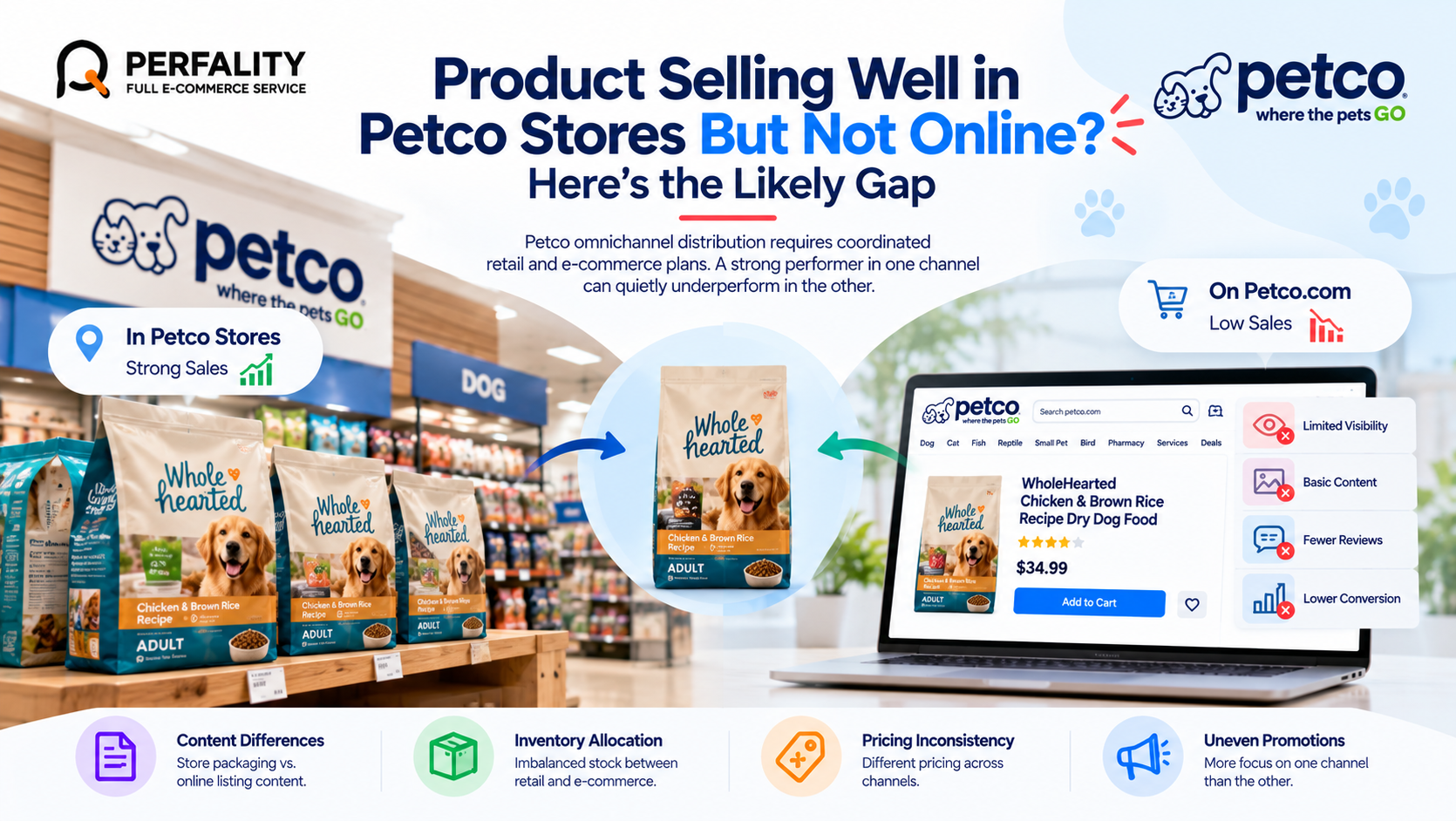
A product performs well on store shelves across Petco’s 1,500-plus locations, and the same item barely registers on Petco.com — or the reverse happens, with strong online sales and weak retail sell-through. Petco omnichannel distribution success depends on treating retail and e-commerce as coordinated but genuinely distinct efforts, and a common, avoidable mistake is managing both as if a single strategy automatically covers each.
Because Petco explicitly builds its growth strategy around integrated omnichannel experiences — including features like buy-online-pickup-in-store for repeat customers — a vendor’s own channel strategy needs to be built with that same coordination in mind, not as an afterthought.
Where Petco Omnichannel Distribution Gaps Typically Show Up
- Content built for only one channel: packaging and messaging optimized for shelf standout doesn’t always translate to a compelling Petco.com listing, and vice versa.
- Inventory allocation imbalances: a vendor over-indexing on retail distribution capacity can under-supply Petco.com fulfillment, or the reverse, without a deliberate allocation strategy.
- Pricing inconsistency between channels, which can create buyer confusion or channel conflict if not managed deliberately.
- Uneven promotional or advertising investment: a brand pushing Petco Retail Media Network spend without a parallel retail merchandising push (or vice versa) misses the reinforcing effect of showing up consistently across both.
Why This Matters More at Petco Than at a Pure E-Commerce Player
Because Petco’s own strategic direction leans into integrated omnichannel experiences, a vendor whose retail and e-commerce performance diverge sharply stands out against that backdrop in category buyer conversations — it raises the question of whether the brand’s overall retail relationship is being managed with the same coordination Petco itself is investing in. A brand that shows strength in only one channel, even a strong one, reads as an incomplete partnership relative to Petco’s own direction.
How to Build a Genuinely Coordinated Distribution Strategy
- Review retail sell-through and Petco.com performance together on a regular basis, rather than tracking each channel in isolation.
- Build content and packaging with both contexts in mind from the start, rather than optimizing one and adapting the other afterward.
- Set a deliberate inventory allocation strategy between retail distribution and e-commerce fulfillment based on actual demand data from both channels.
- Coordinate promotional timing — retail merchandising pushes and Petco Retail Media Network campaigns — so both channels reinforce the same moment rather than operating on separate calendars.
How Perfality Approaches This
For Petco vendor accounts, retail and e-commerce performance are reviewed together as one relationship, not as two separate workstreams. That includes:
- Combined performance reviews: retail sell-through and Petco.com data are reviewed side by side on a regular cadence, surfacing a channel imbalance before it becomes a pattern a category buyer notices independently.
- Dual-context content planning: packaging and digital content are planned together from the outset, rather than building one and retrofitting the other.
- Data-driven inventory allocation: retail and e-commerce fulfillment allocation is set based on actual demand signals from both channels, not a static historical split.
- Coordinated promotional calendars: retail merchandising and Retail Media Network campaigns are timed together, reinforcing the same push rather than running independently.
Related Services
If a product’s retail and online performance have drifted apart, that’s worth addressing directly with a coordinated content and inventory plan rather than optimizing one channel further while ignoring the other. A team already reviewing both channels together tends to catch this imbalance before it becomes a topic in a category buyer conversation.
Depending on how you’re searching, this kind of support is also known by these names:
- Full-service Amazon management: Full Service Amazon Management, Full Service Amazon Agency, Amazon Full Service Agency, Full Service Amazon Marketing Agency, Best Full-Service Amazon Agency, Best Full Service Amazon Agency
- FBA-focused support: Amazon FBA Management Agency, Amazon FBA Agency, Amazon FBA Marketing Agency, Amazon FBA Management Service
- Listing and content optimization: Amazon Listing Optimization Services, Amazon Listing Optimization Agency, Amazon Listing Optimization Service, Amazon Product Listing Optimization Service, Amazon Product Listing Optimisation Service, Amazon Product Listing Optimisation Service USA
- Product listing services: Amazon Product Listing Service, Amazon Product Listing Service Provider, Best Amazon Product Listing Service Agency
- PPC and advertising management: Amazon PPC Management Service, Amazon PPC Management Service Agency, Best Amazon PPC Management Service, PPC Management Service For Amazon
- Account management: Best Amazon Account Management Services, Amazon Ecommerce Company
Frequently Asked Questions
This often points to content or packaging built primarily for retail shelf standout that doesn’t translate to a compelling digital listing, or an inventory allocation strategy that under-supplies e-commerce fulfillment relative to retail distribution.
Petco’s own growth strategy emphasizes integrated omnichannel experiences, so a vendor whose retail and online performance diverge sharply can stand out against that backdrop in category buyer conversations.
By planning retail merchandising pushes and Petco Retail Media Network advertising campaigns together on the same calendar, so both channels reinforce the same promotional moment rather than operating independently.
If this is a recurring pain point rather than a one-off, it’s usually worth a quick conversation. Book a free 30-minute call with our team and we’ll walk through what’s actually happening on your account.
Have any questions? Let’s connect!