




- Perfality
- October 20, 2026
- 10:50 am
- Read Time: 10 mintues
A contractor replacing a hundred feet of pipe and a homeowner fixing one leaking tap may buy the same fitting, but they do not read the page the same way. One wants a spec, a pack count and confidence the part will work every time. The other wants reassurance that they will not need to make a second trip.
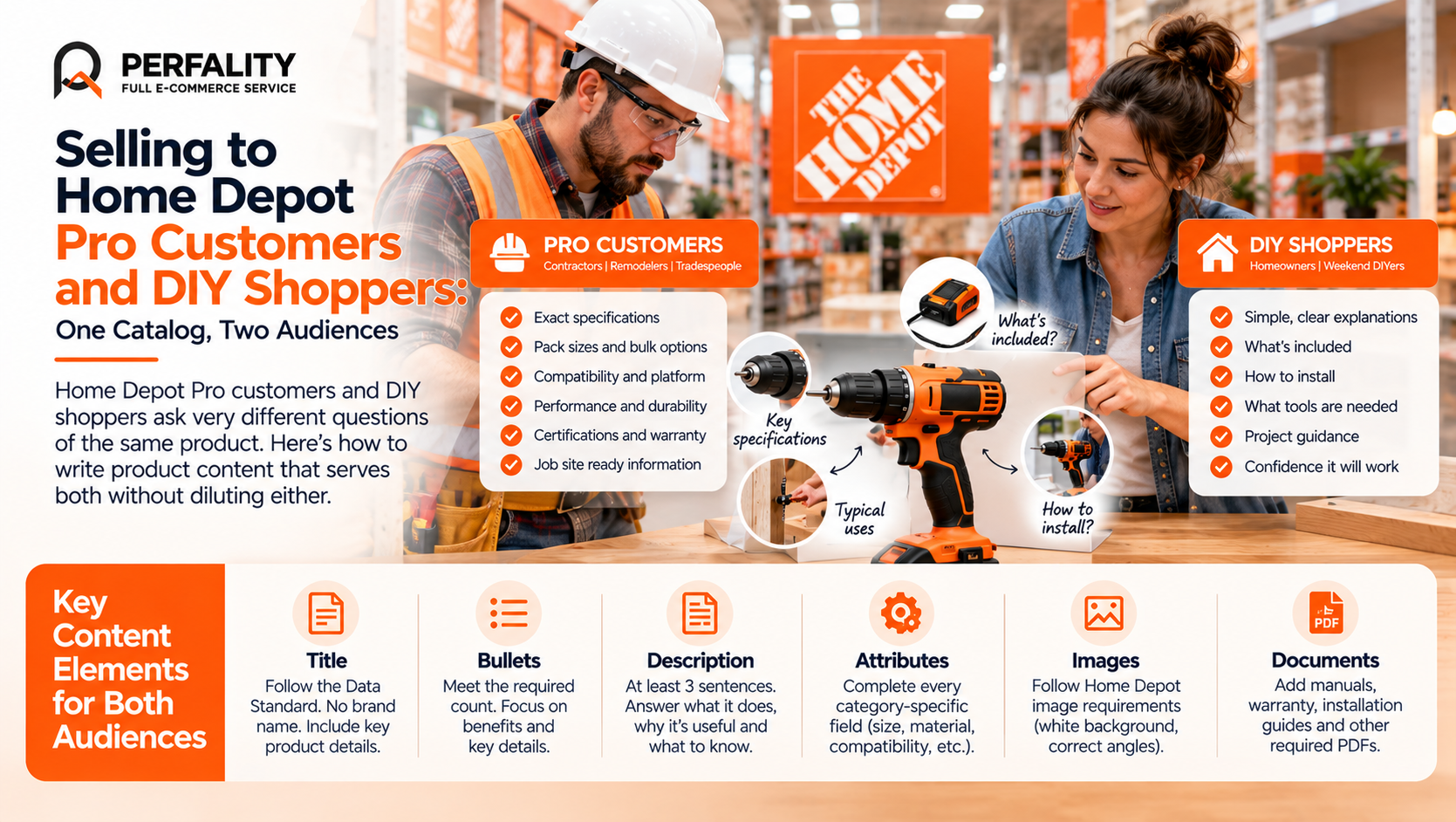
Home Depot Pro customers, meaning contractors, remodelers and tradespeople, are an important buying group for suppliers in many categories. Product content that treats everyone as a beginner quietly loses the professionals, and content written only for professionals can intimidate everyone else. This guide shows how to write for both.
Why Home Depot Pro Customers Change How You Write
Professionals buy repeatedly, often in volume, and often for a job with a deadline. They already know the vocabulary. A wrong or vague detail costs them time on a job site, so they scan for specifics and leave quickly if they do not find them.
DIY shoppers are buying once, for a project they may be doing for the first time. They need context: what the product does, what else they need to buy, and how hard it will be to install.
The question | The Pro buyer wants | The DIY buyer wants |
How much is in the pack? | Exact count and size, ideally for bulk buying. | Enough for one project, clearly explained. |
Will it work with what I have? | Compatibility lists and platform names. | Plain-language fit guidance. |
How do I install it? | Spec sheets and tolerances. | Step-by-step guides and what tools are needed. |
Is it durable? | Ratings, certifications, warranty terms. | Reassurance in simple terms. |
Three Product Types, Three Different Content Jobs
Consumables: Fasteners, Sealants and Fittings
These products are bought by both groups, so precision wins. State the pack count, size, material and finish in the title and the first bullet. Add a short line on typical use for the DIY reader, and keep the specification table clean for the professional.
Tools and Power Equipment
Compatibility decides the sale. A buyer already invested in a battery platform wants to know immediately whether your tool belongs in it. Name the platform, list what is in the kit, and make clear whether the battery and charger are included.
Install-Heavy Products: Flooring, Faucets and Fixtures
These need the most explaining. Dimensions, rough-in sizes and installation requirements reduce returns, and clear instructions are what turn a hesitant homeowner into a buyer.
Manuals, Installation Guides and Warranty Documents
Home Depot’s Data Standard lists documents such as manuals, warranty information, assembly instructions and parts lists for many categories. It is tempting to treat them as paperwork. In practice they are some of the most useful assets on the page for both audiences.
- Make sure each document is the current version and matches the product being sold.
- Use clear file names so a shopper knows what they are downloading.
- Check that the first page makes sense without the rest, because many readers only open it once.
A Simple Audience Audit You Can Run This Week
- Pick your ten best-selling SKUs. These are where improved content pays back fastest.
- Read each page as a Pro, then as a DIYer. Note every question you cannot answer in under ten seconds.
- Fix the gaps in order of impact. Compatibility and quantity usually come first.
- Review returns and questions. Customer feedback shows which audience your page is failing.
Writing the Same Product Twice: A Worked Example
Take a fictional 20V impact driver. The facts are identical for everyone, but the order and emphasis change depending on who is reading. You do not need two pages. You need a page that serves both in the right order.
Element | What the Pro scans for | What the DIYer scans for |
First bullet | Torque, chuck size and battery platform. | What the tool is good for around the house. |
Contents | Tool only, or kit with batteries and charger. | Everything needed to start, with no hidden extras. |
Warranty | Length and what it covers. | Reassurance that they can return it. |
Support | Spec sheet and parts diagrams. | Quick-start guide and videos. |
The Pro line goes first because it is short and precise. The DIY context sits beneath, where a first-time buyer can find it without the professional having to scroll past it.
Selling in Volume: Packs, Bundles and Pro Quantities
Professionals rarely buy one of anything. A contractor finishing a deck needs several hundred fasteners, and a remodeler needs a dozen fixtures. Make pack sizes and bundle contents unmistakable, and consider whether a larger pack deserves its own listing with its own title and images.
- State the exact count in the title, not just in a bullet.
- Show the per-unit cost clearly if the pack offers a better rate than a smaller one.
- Make sure bundles include every part needed, and say so in the bullets.
Several of these changes are simple edits with real impact. Our before and after listing results show how modest content changes can move performance, and our signs your catalog needs optimization checklist helps you decide where to start.
To go further, structured market research can show how shoppers in your category actually compare products, which helps you decide what belongs at the top of the page.
How Perfality Supports Audience-Led Content
We help suppliers turn audience insight into pages that work for both Pro and DIY buyers:
- Audience audit: your top SKUs reviewed through both buyer lenses to find the gaps.
- Content structure: specification-first pages with plain-language context underneath.
- Creative and documents: supporting visuals and guides through our content and design solution.
- Research input: shopper and competitor insight from our market research
- Return and feedback review: customer feedback used to find where content is failing.
Related Services
If your Home Depot pages answer only one audience’s questions, a quick audience audit usually reveals fast wins. For the full picture of what we do for suppliers selling to The Home Depot, see our Home Depot account management service. Depending on where this issue keeps recurring, this is the kind of support that typically helps:
- Full-service Amazon management: Full Service Amazon Management, Full Service Amazon Agency, Amazon Full Service Agency, Full Service Amazon Marketing Agency, Best Full-Service Amazon Agency, Best Full Service Amazon Agency
- FBA-focused support: Amazon FBA Management Agency, Amazon FBA Agency, Amazon FBA Marketing Agency, Amazon FBA Management Service
- Listing and content optimization: Amazon Listing Optimization Services, Amazon Listing Optimization Agency, Amazon Listing Optimization Service, Amazon Product Listing Optimization Service, Amazon Product Listing Optimisation Service, Amazon Product Listing Optimisation Service USA
- Product listing services: Amazon Product Listing Service, Amazon Product Listing Service Provider, Best Amazon Product Listing Service Agency
- PPC and advertising management: Amazon PPC Management Service, Amazon PPC Management Service Agency, Best Amazon PPC Management Service, PPC Management Service For Amazon
- Account management: Best Amazon Account Management Services, Amazon Ecommerce Company
If this is a recurring pain point rather than a one-off, it’s usually worth a quick conversation. Book a free 30-minute call with our team and we’ll walk through what’s actually happening on your account.
Frequently Asked Questions
They are professional buyers such as contractors, remodelers and tradespeople who purchase for work rather than for a one-off home project.
No. Lead with the specifications professionals need, then add plain-language guidance beneath it for DIY shoppers.
Installation guides, warranty information and clear spec sheets, because they answer the questions that otherwise lead to returns.
Audit your ten best-selling SKUs by reading each page as a professional and then as a first-time DIYer.
Have any questions? Let’s connect!