



- Perfality
- July 10, 2025
- 11:00 am
- Read Time: 5 mintues
Real advice. No hype. Just the stuff you need to know.
So you’ve been thinking about selling on Amazon. Maybe someone told you it’s a great way to make passive income. Or you saw a video of someone who started with one product and now they’re “crushing it.” Sounds awesome, right?
But where do you actually start? This Amazon seller guide is here to lay it out for you—step by step, with no fluff.
Why Amazon? What’s the Big Deal?
Let’s not sugarcoat it—Amazon is a beast. It’s where millions of people shop daily, and once you get in, it can move fast. You don’t need to open a store or build a fancy website. Amazon already has the traffic. You just need to show up the right way.
That said, selling there isn’t a cakewalk. If you’re thinking of winging it, don’t. A lot of new sellers lose money because they skip the basics. That’s why this Amazon seller guide exists—to help you not do that.
Step 1: What Should You Sell?
This is the part where most people get stuck—and honestly, it’s okay. You don’t need a one-in-a-million product. But you do need one that people actually want to buy.
Here’s a good way to look at it:
- Don’t chase trends. They disappear fast.
- Pick something people need year-round.
- Make sure it’s lightweight (shipping costs matter) and not likely to break.
If you’re still in the early phase and checking out Amazon FBA for beginners, keep it simple. Your first product doesn’t have to be a home run. You just need it to sell.
Step 2: Setting Up Your Account
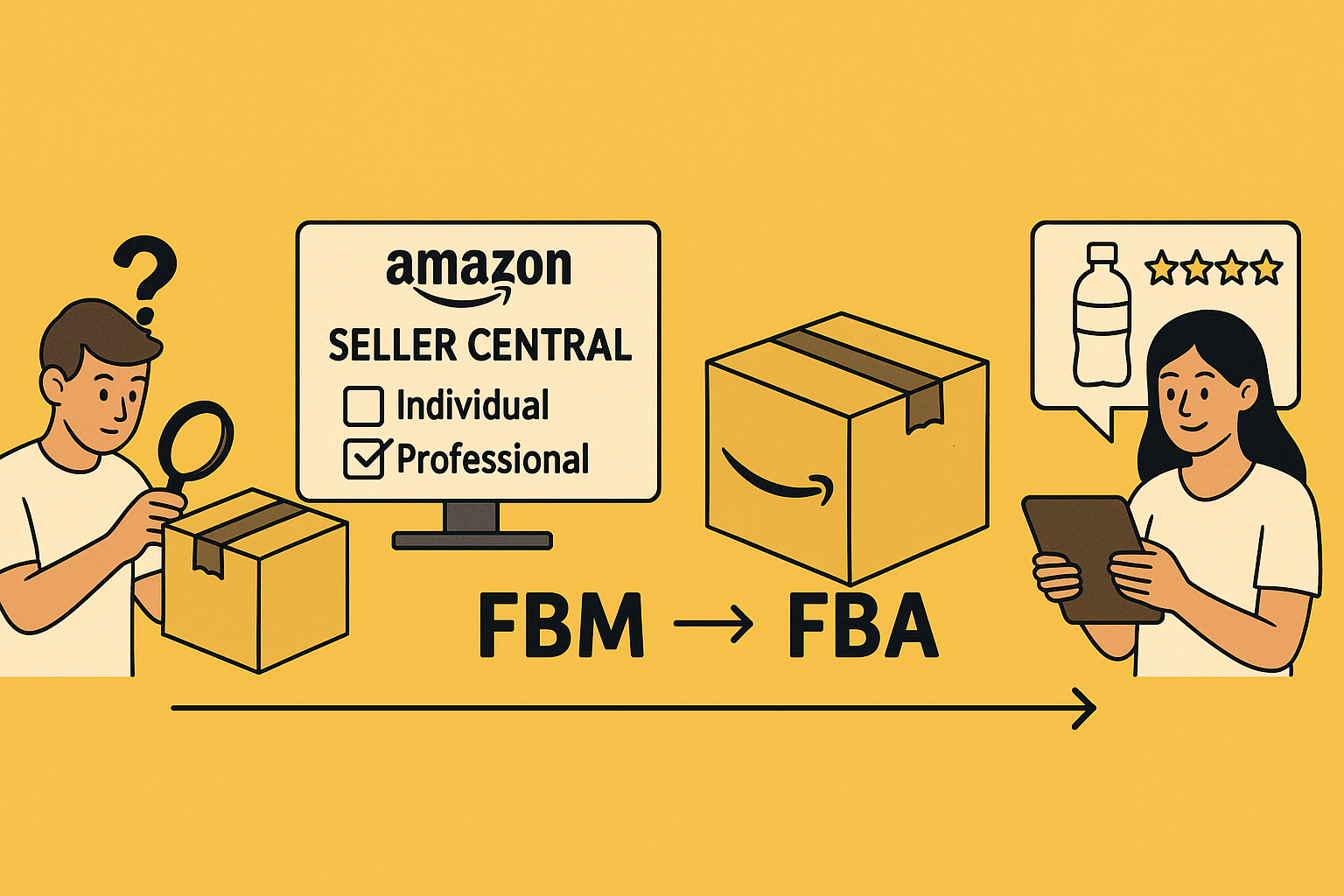
Time to go official. Head to Amazon Seller Central and sign up. You’ll need your ID, tax info, bank account—basic stuff. You’ll choose between:
- Individual account: Good for testing the waters
- Professional account: Best if you plan to sell regularly
Most folks starting seriously go with the pro plan. If you’re Googling how to become an Amazon seller, this is your moment—it’s the first real step in the door.
Step 3: FBA vs FBM – What’s Best for You?
Here’s the deal. You can:
- Ship the orders yourself (FBM – Fulfilled by Merchant), or
- Let Amazon do the heavy lifting (FBA – Fulfilled by Amazon)
If you’re just starting out, FBA is usually the smarter move. Amazon stores your inventory, ships orders, handles returns—basically, they do the hard stuff. Just know you’re paying for that service, so you need to factor it into your product pricing.
Step 4: Listings Matter—A Lot
Here’s where new sellers make rookie mistakes. A weak product listing = no sales. Period.
Make sure your listing:
- Uses clear, human language (not keyword soup)
- Shows your product in action with clean, real photos
- Answers questions before they’re asked
One of the best Amazon seller tips out there? Think like a shopper. If you wouldn’t buy your product based on what you wrote—fix it.
Step 5: Launch Smart, Then Improve
You don’t need to blow your budget on ads right away. Start small. Track your sales. Check your reviews. If customers say “the lid doesn’t close right” or “the color’s off,” don’t just ignore it—fix it.
That’s what successful sellers do. They improve. Constantly.
Any real Amazon seller guide should remind you: you don’t need perfection. You need progress.
👋 A Quick Word About Perfality
Whether you’re just figuring things out or already running a large catalog, Perfality helps sellers of all sizes keep their Amazon operations in order.
We’re not some cookie-cutter agency. We’re hands-on. We work with small brands launching their first SKU, and big ones managing complex operations. From listings and inventory to fulfillment support, we handle the backend so you can focus on the big picture.
And yes—when things get messy (and they will), we’re the ones who help clean it up.
Final Thoughts
Amazon’s not a get-rich-quick platform. It’s a business—and it can grow fast if you stay focused. Follow the steps, keep learning, and stay flexible.
Thinking of starting? Already started and feeling stuck? Wherever you are, just know: you don’t have to figure it all out alone.Need help? Reach out to Perfality. We work with sellers who are serious about growing—without burning out in the process.
Amazon seller guide: the 5-step checklist
- Choose a product people need year-round that is light and not likely to break.
- Set up your Seller Central account with your ID, tax info and bank account, and pick Individual or Professional.
- Decide between FBM (you ship) and FBA (Amazon stores, ships and handles returns), and build the FBA fees into your price.
- Write a clear listing with real photos that answers shopper questions before they are asked.
- Launch with a small budget, watch sales and reviews, and keep improving.
Amazon seller guide FAQs
Do I need a Professional seller account?
An Individual account is good for testing the waters. A Professional account is best if you plan to sell regularly, and most people who start seriously choose it.
Is FBA or FBM better for a new seller?
If you are just starting out, FBA is usually the smarter move, because Amazon stores your inventory, ships orders and handles returns. You pay for that service, so factor it into your pricing.
How much should I spend on ads at the start?
You do not need to spend a large budget on ads right away. Start small, track your sales, check your reviews and fix what customers complain about.
Related: Want hands-on help? See our Amazon Account Management Services, our Amazon Product Listing Service or What is Amazon FBA and How Does It Work?.
Want a free review of your marketplace setup? Book a free 30-minute call with Perfality.