




- Perfality
- August 10, 2026
- 11:00 am
- Read Time: 10 mintues
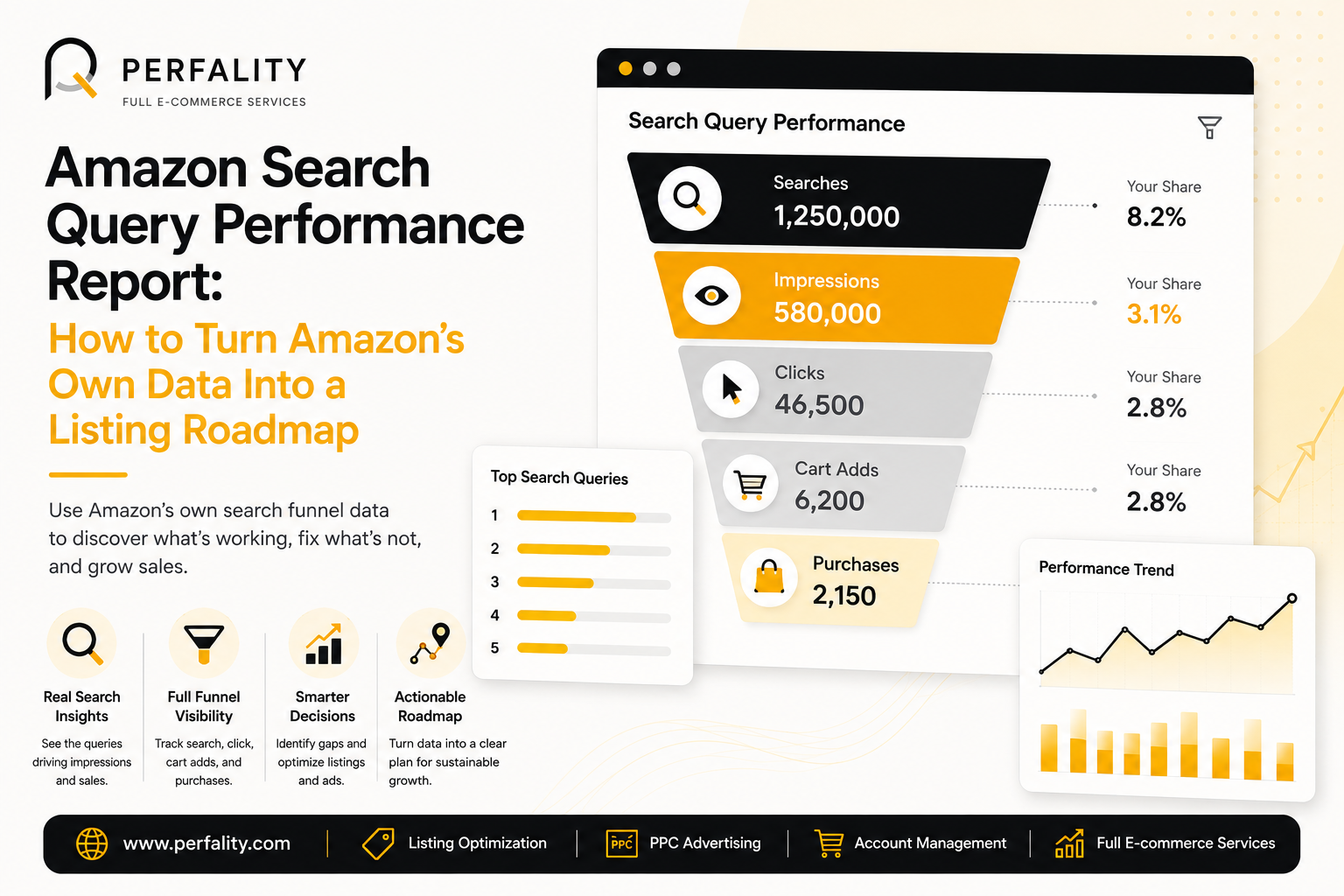
Most Amazon sellers already know their sales numbers. Far fewer have opened the Amazon Search Query Performance report — the one dataset in Seller Central that shows what happens between a shopper’s search and their decision not to buy. It isn’t sales data. It’s funnel data: search volume, impressions, clicks, cart adds, and purchases, broken down by the exact query a shopper typed in. For brand-registered sellers, it’s the closest thing to sitting behind the shopper’s shoulder while they search.
This guide walks through what the report actually shows, where most sellers misread it, and how to turn a wall of funnel percentages into a monthly listing and PPC routine.
What the Search Query Performance Report Actually Shows
The Search Query Performance (SQP) report lives inside Amazon Brand Analytics, and it tracks the full search funnel for any query that touched one of your ASINs: how many times shoppers searched that term, how many times your listing appeared, how many of those impressions turned into clicks, how many clicks became cart adds, and how many cart adds became purchases.
The number that makes it useful isn’t the raw count — it’s your share of each stage. Amazon shows total market impressions, clicks, cart adds, and purchases for the query across every seller competing for it, alongside your ASIN’s slice of that total. A listing pulling 8% of impressions but only 3% of clicks is telling you something specific: shoppers are seeing the listing and passing on it. That’s a different problem, with a different fix, than a listing that pulls strong clicks but weak purchases.
This is the same funnel-first approach that shapes our retail data analytics work for clients — SQP data is only valuable once it’s tracked against a baseline, not read once and filed away.
Where to Find It (and Who Can Access It)
SQP sits under Brands → Brand Analytics → Search Query Performance in Seller Central. Getting there requires a registered or pending trademark, Brand Registry enrollment, and brand representative permissions on a Professional selling account. Resellers and distributors who don’t own the brand generally don’t get access — the report is tied to brand ownership, not just account type.
Choosing Between ASIN View and Brand View
Once you’re in, you can pull the report at the ASIN level or the brand level. ASIN view is useful when you already suspect a specific listing has a funnel problem. Brand view works better for a monthly scan — sort by search volume, and the queries worth acting on usually surface within the first page or two.
Three Diagnostic Patterns Worth Acting On
Most SQP problems fall into one of three patterns. Each points to a different fix.
High Impression Share, Low Click Share
Shoppers are seeing your listing at a rate that matches or beats competitors, but they aren’t clicking. This is usually a title, main image, or price problem — the listing isn’t winning the click even though it’s winning the impression. It’s the clearest signal to bring in Amazon product listing work focused specifically on the search-results-page experience, not the full detail page.
High Click Share, Low Purchase Share
Shoppers click through at a healthy rate but don’t buy. The listing wins attention on the results page, then loses the sale once shoppers land on it — usually a mismatch between what the title and image promised and what the bullets, images, or price deliver once they’re on the page.
Strong Purchase Share, But Only on Branded Terms
The listing converts well when shoppers already search your brand name, but falls off on generic category terms. That’s a discovery problem, not a conversion one — the fix usually sits in keyword coverage and PPC targeting rather than the listing copy itself.
What SQP Can’t Tell You
SQP doesn’t separate organic clicks from paid ones, so pair it with your advertising console before making a call. It doesn’t break out shopper demographics — that lives in a separate Brand Analytics report. Purchase attribution runs on roughly a 24-hour window from the original search, and the report excludes direct-to-PDP traffic, meaning shoppers who typed in a URL or arrived from an ad landing page rather than a search results page.
It also doesn’t see AI-assisted discovery. Amazon’s Rufus shopping assistant now answers many product questions directly in the search bar, before a shopper ever reaches a results page, and none of that activity shows up in Brand Analytics. Treat SQP as one input among several — pair it with PPC reporting and organic rank tracking rather than relying on it alone.
Who Should Actually Own This Work
SQP data is genuinely useful, but only if someone acts on it every month. For brands without a dedicated in-house analyst, the search for help usually starts with a familiar phrase: Amazon FBA Management Agency, Amazon FBA Agency, or Amazon FBA Marketing Agency — three ways of describing the same need, a partner who can read funnel data and turn it into changes on the account.
Other teams look for something broader. They want Full Service Amazon Management or a Full Service Amazon Agency that owns everything from SQP review to fulfillment, not just the listing side. Some brands prefer a lighter touch instead: Best Amazon Account Management Services for oversight and reporting, while their own team keeps day-to-day control.
It’s worth knowing what each label actually implies before signing on. An Amazon FBA Management Service typically covers the operational side — inventory, compliance, shipment prep — while an Amazon Full Service Agency or an Amazon Ecommerce Company usually bundles that with content, advertising, and reporting under one roof. Our e-commerce management solutions work is built around that broader definition.
Brands comparing a handful of providers often end up choosing between what’s marketed as a Best Full-Service Amazon Agency and what’s marketed as a Best Full Service Amazon Agency — in practice, the same type of provider, described differently by different agencies. A few go further still, positioning themselves as a Full Service Amazon Marketing Agency to signal that advertising is their primary strength.
Turning SQP Into a Monthly Listing and PPC Routine
Once you’ve decided who owns this, the routine itself is simple:
- Export the brand-level report monthly and sort by search volume.
- Flag any ASIN where click share or purchase share trails impression share by a wide margin.
- Cross-check flagged queries against your PPC search term report to catch wasted spend.
- Route content fixes to whoever owns your listing work, and re-pull the report 30 days later to confirm the change moved the share numbers.
For a step-by-step look at how we structure that content pass, our content audit process walks through the same kind of listing-by-listing review, and our before-and-after breakdown shows what typically changes once the fixes go live.
On the listing side, an SQP flag usually becomes one of a few jobs: Amazon Listing Optimization Services for a full rewrite, a narrower Amazon Listing Optimization Service for a single section like bullets or images, or ongoing work from an Amazon Listing Optimization Agency that treats this as a recurring cadence rather than a one-time fix.
When the gap is specifically about conversion language, brands often search for an Amazon Product Listing Optimization Service — or, using the spelling common in UK and EU searches, an Amazon Product Listing Optimisation Service. Domestic brands sometimes add the qualifier directly, searching Amazon Product Listing Optimisation Service USA to filter for a US-based team.
Not every fix is a rewrite. Sometimes the ask is simpler: an Amazon Product Listing Service to handle new ASIN setup, an Amazon Product Listing Service Provider for ongoing catalog maintenance, or — when the whole catalog needs a pass — a Best Amazon Product Listing Service Agency to audit and rebuild it end to end.
On the advertising side, an SQP click-share or purchase-share gap is usually a signal to revisit campaign structure, not just bids. That’s the kind of work covered by an Amazon PPC Management Service, and specifically by an Amazon PPC Management Service Agency built around funnel data rather than guesswork. Brands vetting a few options tend to search for the Best Amazon PPC Management Service, or simply a PPC Management Service For Amazon, before picking a partner.
How Perfality Helps
Reading SQP data is only half the job — someone still has to fix the listing, adjust the campaign, and check the numbers again next month. That’s the loop our team runs for clients every month, alongside inventory, compliance, and reporting.
If you want a second pair of eyes on your funnel share before your next content or PPC sprint, book a free 30-minute strategy call — we’ll walk through what your Search Query Performance data is actually telling you.