




- Perfality
- August 24, 2026
- 11:00 am
- Read Time: 10 mintues
Most listing changes on Amazon are a guess dressed up as a decision — swap the main image, wait a month, eyeball the sales chart, and hope. Amazon Manage Your Experiments replaces the guess with a real test: two versions of a listing element, split against live traffic, with Amazon declaring a statistically significant winner instead of you squinting at a trend line.
Here’s how the tool actually works, what’s worth testing first, and the mistakes that quietly invalidate a result.
What Manage Your Experiments Actually Does
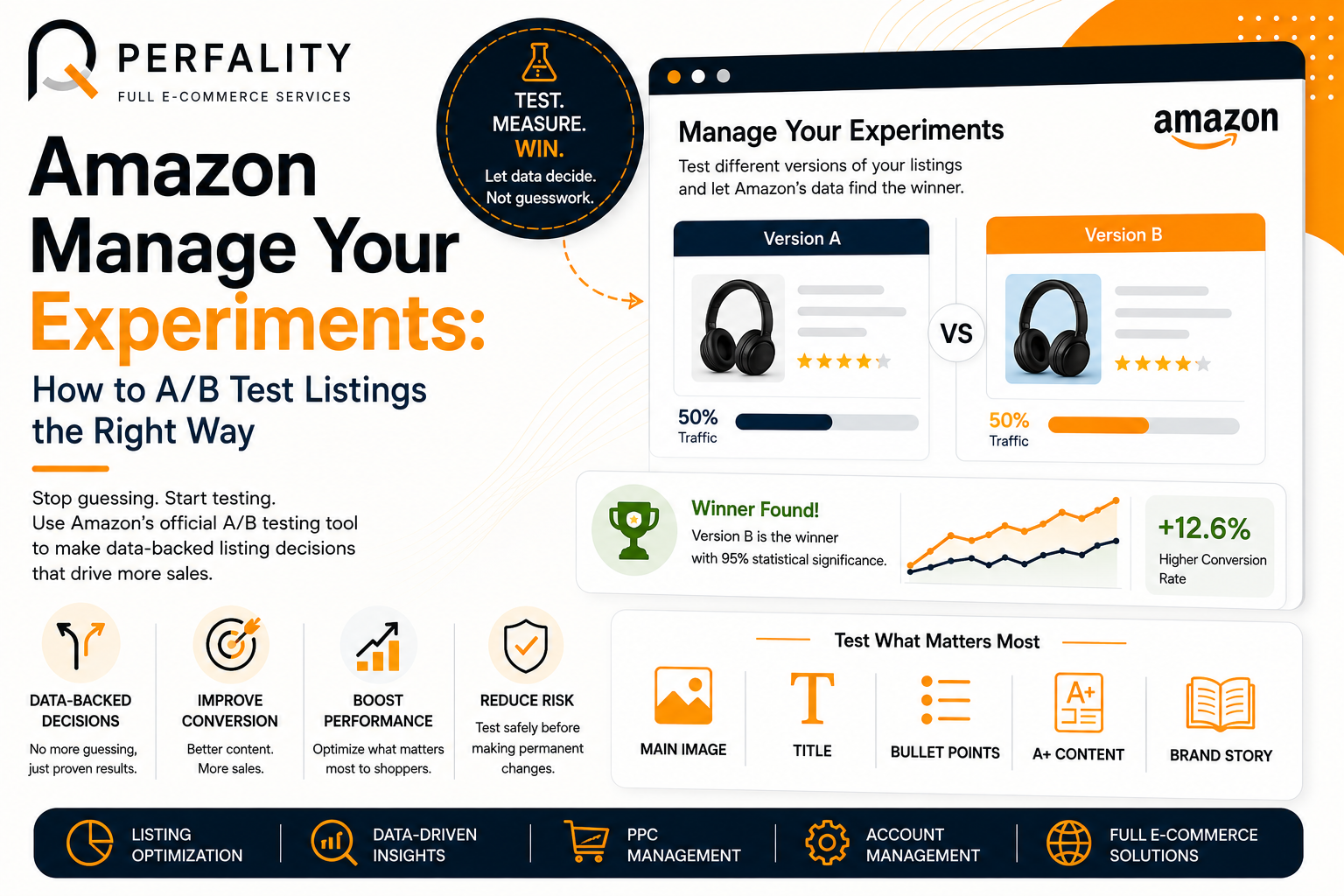
Manage Your Experiments (MYE) splits traffic roughly 50/50 between two versions of a single listing element — main image, title, A+ Content, bullet points, or brand story — on a live ASIN. Amazon runs the test for a set window, typically 4 to 10 weeks, and declares a winner once it reaches 95% statistical significance.
The test runs on your real audience, not a sample panel, which is exactly why it’s more reliable than eyeballing a before-and-after sales chart. Seasonality, ad spend changes, and traffic swings all get distributed across both versions instead of skewing one of them.
Where to Find It and Who Can Run Tests
MYE sits under Brands → Manage Your Experiments in Seller Central. Select an ASIN, choose the element to test, upload both versions, and Amazon handles the traffic split automatically.
Eligibility Requirements
Running tests requires Brand Registry enrollment, and the ASIN itself needs enough traffic and sales velocity for the result to reach statistical significance. Low-volume SKUs simply won’t qualify — the math can’t resolve a winner without enough data points, so it makes sense to reserve test slots for your volume ASINs rather than your slower movers.
What’s Actually Worth Testing (and What’s a Waste of a Slot)
Not every listing element deserves a test slot. A rough priority order, based on where the leverage actually sits:
Main Image First
The main image is the single biggest lever on click-through and conversion — it decides whether a shopper clicks from search results and whether they trust the product once they land. If you only ever run one test, run it here.
Title Second
Title affects both ranking relevance and the shopper’s first impression on the results page. It’s the natural second test once the image is settled, and a good candidate for the same listing optimization pass that improves your main content.
A+ Content, Bullets, and Brand Story
These matter most once a shopper is already on the page and deciding whether to buy. They’re worth testing, but they move the needle less than the first two — treat them as the second wave of tests, not the starting point.
Common Mistakes That Ruin a Test
- Stopping the test early because one version looks like it’s winning — early leads regularly flip before reaching significance.
- Running a test through Prime Day, Black Friday, or Cyber Monday, when traffic patterns don’t reflect a normal month.
- Changing more than one variable at a time, which makes it impossible to know which change actually drove the result.
- Testing an ASIN with too little traffic to reach statistical significance within the test window.
Our retail data analytics dashboards flag test-eligible ASINs by traffic volume before a test ever launches, so the significance question gets answered before the slot is spent, not after.
Reading the Results (and What Happens After)
A declared winner comes with a significance level, not just a sales number — read conversion rate, not raw units, since traffic can shift slightly between the two versions over a multi-week window. Once a winner is declared, roll it out as the permanent version everywhere the tested content lives, including any duplicate listings.
Treat this as a recurring cycle, not a one-time project. Markets shift, competitors change their own images and titles, and a winning variant from six months ago isn’t guaranteed to still be the best option today. Our content audit process and before-and-after breakdown both cover what that ongoing review looks like in practice.
Who Should Actually Run and Interpret These Tests
Running a single test is easy. Running a testing program — one that queues the next hypothesis before the last result even finishes — takes more bandwidth than most in-house teams have to spare. That’s the gap an Amazon FBA Management Agency, an Amazon FBA Agency, or an Amazon FBA Marketing Agency is built to close: turning a single experiment into an ongoing cycle instead of a one-off project.
Brands that want the whole account handled look for Full Service Amazon Management or a Full Service Amazon Agency that treats testing as one more input alongside inventory and advertising. Others prefer narrower help — Best Amazon Account Management Services for oversight while testing decisions stay in-house.
The scope varies by label. An Amazon FBA Management Service usually covers operations — inventory, compliance, fulfillment — while an Amazon Full Service Agency or an Amazon Ecommerce Company usually folds testing, content, and advertising into the same engagement. That broader model is closer to how our e-commerce management solutions work is structured.
As with most Amazon services, the marketing labels overlap more than the substance does. A Best Full-Service Amazon Agency and a Best Full Service Amazon Agency are typically describing the same scope of work, and a Full Service Amazon Marketing Agency usually just means advertising leads the pitch.
Turning Test Results Into a Listing and Content Roadmap
A winning variant is only useful once it’s rolled out everywhere it should be. That’s usually Amazon Listing Optimization Services territory — or, for a single section like the bullets, a narrower Amazon Listing Optimization Service. Brands running tests across dozens of ASINs typically bring in an Amazon Listing Optimization Agency to keep the backlog of winning variants moving instead of sitting in a queue.
When the test result points to a full content rewrite, sellers look for an Amazon Product Listing Optimization Service, or — in UK and EU searches — an Amazon Product Listing Optimisation Service. Domestic brands sometimes search Amazon Product Listing Optimisation Service USA specifically for a US-based team.
Smaller jobs come up too: an Amazon Product Listing Service to build the second version of a test from scratch, an Amazon Product Listing Service Provider for the ongoing catalog work between tests, or a Best Amazon Product Listing Service Agency when a whole product line needs a coordinated testing calendar.
On the advertising side, a winning main image or title test usually changes your PPC math too — creative that lifts organic conversion tends to lift ad conversion as well. That’s the trigger for an Amazon PPC Management Service, specifically an Amazon PPC Management Service Agency that updates creative across organic and paid together. Sellers comparing providers look for the Best Amazon PPC Management Service, or simply a PPC Management Service For Amazon, before making the switch.
How Perfality Helps
We build testing into the same monthly cadence as inventory, compliance, and PPC review — not as a separate project that starts and stops. If you want help deciding what’s worth testing next, or reading a result you’re not sure how to act on, book a free 30-minute strategy call — we’ll go through your catalog together.