




- Perfality
- September 17, 2026
- 11:50 am
- Read Time: 10 mintues
Every seller has a version of this story: a new product goes live, sales trickle in slower than expected, and a few weeks later someone discovers there was already an ASIN for that exact item — created by another seller months earlier. The Amazon new item setup process technically worked. It just built a brand-new listing on top of one that already had reviews, sales velocity, and search ranking.
That single mistake is the most expensive one in Amazon new item setup, and it’s almost entirely avoidable with one extra step before hitting submit.
Amazon New Item Setup: Where It Actually Breaks Down
Amazon new item setup refers to building a catalog entry that has never existed before — not simply adding your inventory to an existing product. The two get confused constantly, and the confusion is expensive.
If another seller has already listed the exact product, the correct move is to match onto that ASIN and list an offer, not create a duplicate. Skipping this check means starting from zero reviews and zero sales history, while a matching ASIN elsewhere already has both.
Gated categories add a second failure point. Toys, grocery, health, and jewelry all require category approval before a new listing can go live, and a missing or undocumented GTIN exemption stalls the whole submission at the worst possible moment — after everything else is ready.
Why This Keeps Happening
Most teams check UPC or product name informally, if at all, before building a listing. When SKU volume is high, that quick check is the first step to get skipped under time pressure — and it’s the one step that actually prevents the costliest error in the whole process.
How to Get New Item Setup Right the First Time
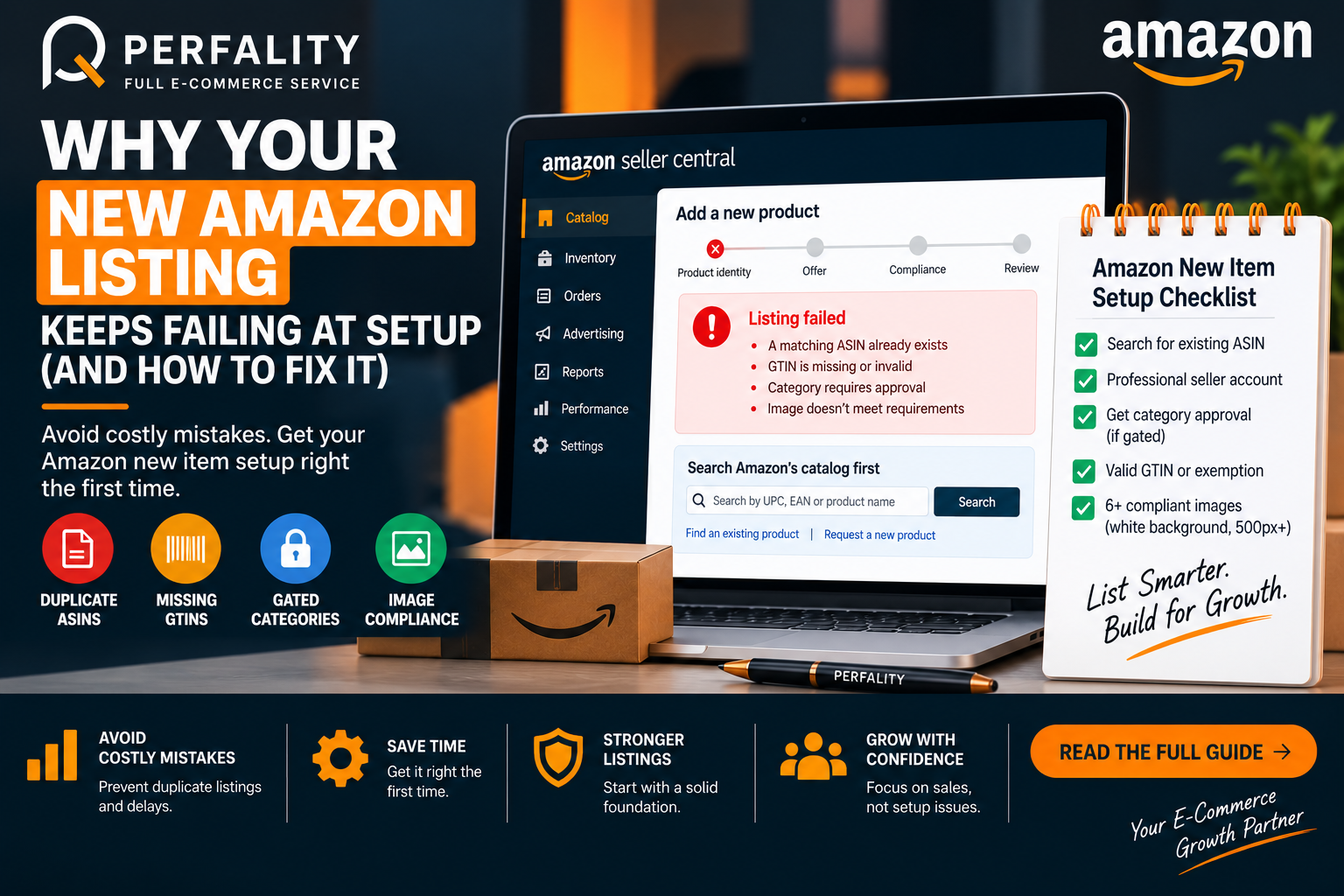
- Search Amazon by UPC, EAN, or exact product name before building anything new — if a match exists, list an offer on it instead.
- Confirm a Professional seller account, since Individual accounts cannot create new catalog entries.
- Apply for category approval in advance for gated categories (Toys, Grocery, Health, Jewelry, and similar).
- Have a valid GTIN ready, or a documented GTIN exemption on file before submission.
- Prepare compliant images up front: a minimum of six, pure white background, at least 500px on the longest side.
How Perfality Approaches This
When we take over catalog setup for a brand, new item setup is treated as a checklist-driven process, not a one-off task handed to whoever has bandwidth that day. In practice, that looks like:
- Duplicate-ASIN sweep first: every planned SKU is checked by UPC, EAN, and product name against the live Amazon catalog before anything gets built, so items that already exist under another seller get routed to a “list as offer” workflow instead of a new listing.
- Pre-flight compliance check: Professional seller status, category approval for gated categories, and a valid GTIN (or documented exemption) are all confirmed before submission, not discovered as a mid-process failure.
- Image readiness built in upfront: a minimum six-image set, pure white background, correct resolution, all prepared before the listing is submitted rather than patched in afterward.
- Standing process, not a one-time audit: for catalogs with high SKU velocity, this sweep runs as part of every onboarding batch, so the check doesn’t quietly get skipped once the initial excitement of a new product launch wears off.
- Template-level fixes: if a mistake shows up once (a missing GTIN exemption, a mismatched brand field), we fix the underlying template or SOP so it doesn’t recur across the next batch of SKUs.
In practice, this is what prevents the single most expensive mistake in Amazon catalog management: building a brand-new listing that starts at zero when a matching ASIN with real sales history already existed.
Related Services
If duplicate ASINs or gated-category delays keep coming up rather than happening once, it’s usually a sign that new item setup needs a dedicated process behind it, not a checklist someone remembers to run under deadline pressure. Whether that means a partner who owns catalog setup end to end, or just a second pair of eyes on your existing workflow, this is exactly the kind of operational gap an experienced Amazon-focused team is built to close.
Depending on how you’re searching, this kind of support is also known by these names:
- Full-service Amazon management: Full Service Amazon Management, Full Service Amazon Agency, Amazon Full Service Agency, Full Service Amazon Marketing Agency, Best Full-Service Amazon Agency, Best Full Service Amazon Agency
- FBA-focused support: Amazon FBA Management Agency, Amazon FBA Agency, Amazon FBA Marketing Agency, Amazon FBA Management Service
- Listing and content optimization: Amazon Listing Optimization Services, Amazon Listing Optimization Agency, Amazon Listing Optimization Service, Amazon Product Listing Optimization Service, Amazon Product Listing Optimisation Service, Amazon Product Listing Optimisation Service USA
- Product listing services: Amazon Product Listing Service, Amazon Product Listing Service Provider, Best Amazon Product Listing Service Agency
- PPC and advertising management: Amazon PPC Management Service, Amazon PPC Management Service Agency, Best Amazon PPC Management Service, PPC Management Service For Amazon
- Account management: Best Amazon Account Management Services, Amazon Ecommerce Company
Frequently Asked Questions
Search Amazon directly by the product’s UPC, EAN, or exact product name. If a matching ASIN appears, list your inventory as an offer on that existing ASIN rather than building a new listing from scratch.
The duplicate listing starts with zero reviews and no sales history, even though a matching ASIN with real traction already exists elsewhere. Amazon may also merge or suppress duplicate listings once identified, so it’s best corrected as soon as it’s discovered.
Most new listings require a valid GTIN (UPC, EAN, or ISBN) unless the product qualifies for a GTIN exemption, which needs to be requested and approved in advance for the specific brand and category.
If this is a recurring pain point rather than a one-off, it’s usually worth a quick conversation. Book a free 30-minute call with our team and we’ll walk through what’s actually happening on your account.
Have any questions? Let’s connect!