




- Perfality
- September 19, 2026
- 3:18 pm
- Read Time: 10 mintues
A monthly evaluation lands, and the account has quietly dropped from Above Standard to Below Standard — with reduced search exposure, higher fees, and selling limits attached. eBay Seller Standards are evaluated against clear published thresholds, but for lower-volume sellers, a small handful of defects can be enough to trigger a real drop.
Understanding exactly what counts as a defect, and how the evaluation window works, is what actually determines how fast an account can recover.
The Two Core eBay Seller Standards Thresholds
- Transaction Defect Rate: must stay at or below 2% of transactions. Top Rated Sellers face a stricter 0.5% threshold.
- Cases Closed Without Seller Resolution: no more than 2 cases, or 0.3% of transactions, whichever applies.
- Late shipment rate and Tracking Validation Rate are also evaluated as service metrics feeding into the overall seller level.
- Evaluations happen monthly, on the 20th, based on recent sales — high-volume sellers (400+ transactions in 3 months) get a 3-month lookback, while lower-volume sellers get a full 12-month lookback.
Why Low-Volume Accounts Are More Exposed
With fewer total transactions, each individual defect carries disproportionate percentage weight. A seller with 200 transactions and 5 defects sits at 2.5% — enough on its own to trigger Below Standard — while the same 5 defects on a 2,000-transaction account barely register. This is why smaller or newer sellers see standards volatility that established high-volume sellers rarely experience.
Defects generally remain on the account for either 60 or 90 days depending on the specific screen and metric, aging out gradually rather than clearing all at once.
How to Actually Recover
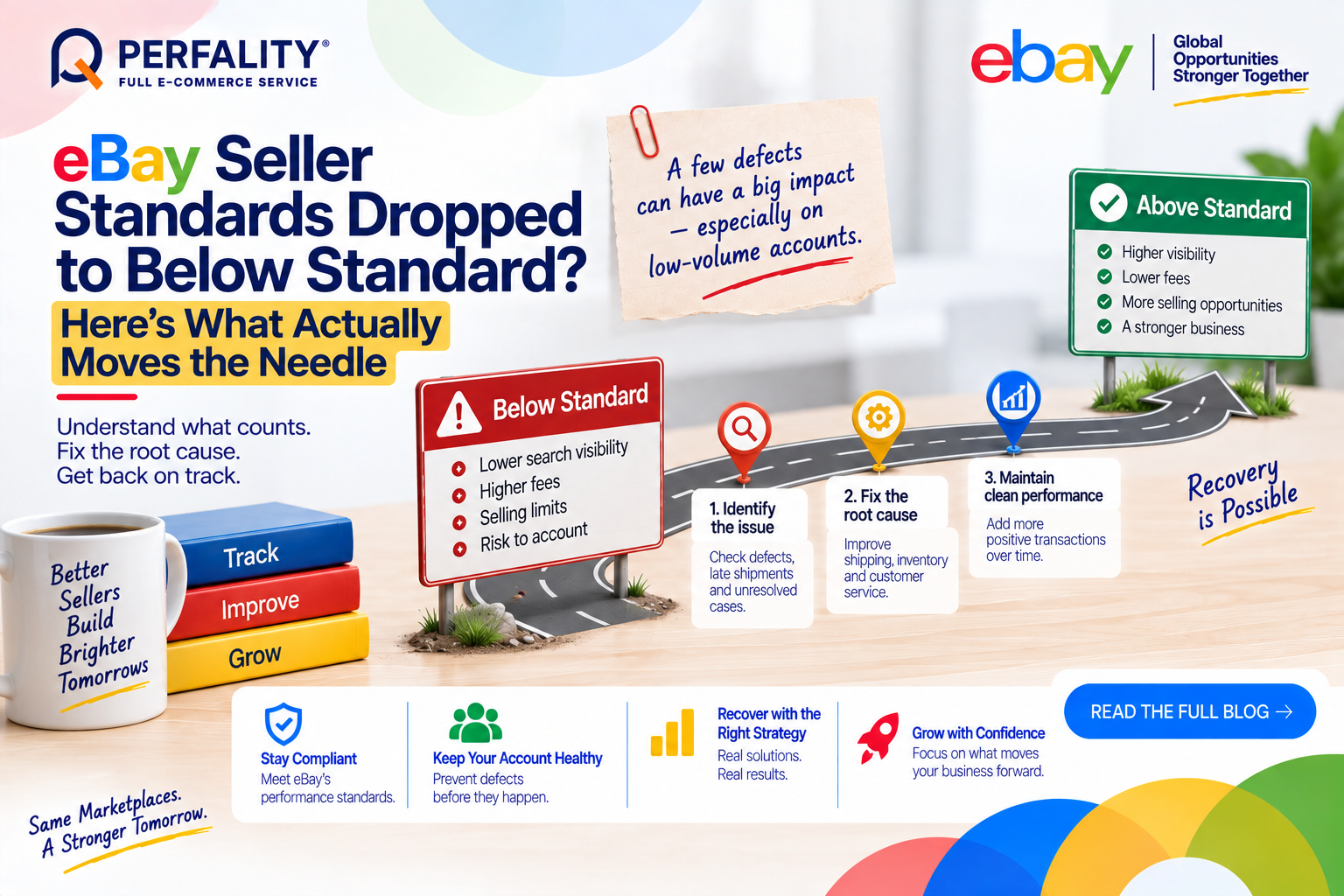
- Identify the exact defect source — inventory accuracy, shipping delays, or cancellations — rather than treating the drop as one undifferentiated problem.
- Fix the root cause immediately, since new clean transactions are what dilute the defect percentage over time; the metric doesn’t improve retroactively.
- Respond to cases within 24 hours and aim for direct resolution before eBay Money Back Guarantee steps in, since cases closed without seller resolution carry their own separate threshold.
- For defects genuinely outside seller control (documented carrier delays, buyer-side issues), request a review rather than assuming the number is permanent.
- Expect gradual, not immediate, recovery — most accounts return to Above Standard within a few months of clean transactions once the underlying cause is fixed.
How Perfality Approaches This
For eBay accounts, Seller Standards are tracked against both thresholds continuously, not reviewed only when a monthly evaluation surfaces a problem. That includes:
- Defect-source diagnosis: every defect gets traced to its specific root cause — inventory, shipping, or case handling — rather than treated as one generic metric to fix.
- Low-volume sensitivity awareness: for accounts where each transaction carries outsized percentage weight, defect prevention gets prioritized more aggressively than on high-volume accounts.
- 24-hour case response discipline: cases are addressed within a day specifically to keep Cases Closed Without Seller Resolution below its separate threshold.
- Recovery timeline tracking: rather than expecting instant recovery, clean-transaction volume is tracked against the defect aging window to project a realistic return to Above Standard.
Related Services
If Seller Standards have dropped unexpectedly, tracing the specific defect source matters more than reacting to the overall status change, since Transaction Defect Rate and Cases Closed Without Seller Resolution have entirely separate thresholds and causes. A team monitoring both continuously tends to catch a drift before it becomes a formal evaluation problem.
Depending on how you’re searching, this kind of support is also known by these names:
- Full-service Amazon management: Full Service Amazon Management, Full Service Amazon Agency, Amazon Full Service Agency, Full Service Amazon Marketing Agency, Best Full-Service Amazon Agency, Best Full Service Amazon Agency
- FBA-focused support: Amazon FBA Management Agency, Amazon FBA Agency, Amazon FBA Marketing Agency, Amazon FBA Management Service
- Listing and content optimization: Amazon Listing Optimization Services, Amazon Listing Optimization Agency, Amazon Listing Optimization Service, Amazon Product Listing Optimization Service, Amazon Product Listing Optimisation Service, Amazon Product Listing Optimisation Service USA
- Product listing services: Amazon Product Listing Service, Amazon Product Listing Service Provider, Best Amazon Product Listing Service Agency
- PPC and advertising management: Amazon PPC Management Service, Amazon PPC Management Service Agency, Best Amazon PPC Management Service, PPC Management Service For Amazon
- Account management: Best Amazon Account Management Services, Amazon Ecommerce Company
Frequently Asked Questions
A Transaction Defect Rate above 2%, or Cases Closed Without Seller Resolution above 2 cases (or 0.3% of transactions), either of which can independently trigger a Below Standard rating.
Generally 60 or 90 days depending on the specific metric and screen, aging out gradually as the evaluation window rolls forward rather than clearing all at once.
Most sellers return to Above Standard within a few months of clean transactions, once the root cause of the original defects has actually been fixed — recovery isn’t retroactive, it depends on diluting the defect rate with new clean sales.
If this is a recurring pain point rather than a one-off, it’s usually worth a quick conversation. Book a free 30-minute call with our team and we’ll walk through what’s actually happening on your account.
Have any questions? Let’s connect!