



- Perfality
- September 29, 2026
- 11:02 am
- Read Time: 10 mintues
A Sponsored Products campaign launches with a reasonable budget, and the results come back mediocre — decent clicks, weak conversion, rising cost per acquisition. Wayfair Sponsored Products offers two genuinely different targeting approaches — automatic Product Based Sponsorship and manual Keyword Based Sponsorship — and running the wrong one for a given goal is a common, fixable cause of underwhelming results.
For teams with an Amazon Advertising background, the comparison is useful but imperfect: Wayfair Sponsored Products maps loosely to Amazon Sponsored Products, and Wayfair Sponsored Shops maps loosely to Amazon Sponsored Brands, but the targeting mechanics underneath aren’t identical.
The Two Wayfair Sponsored Products Targeting Types
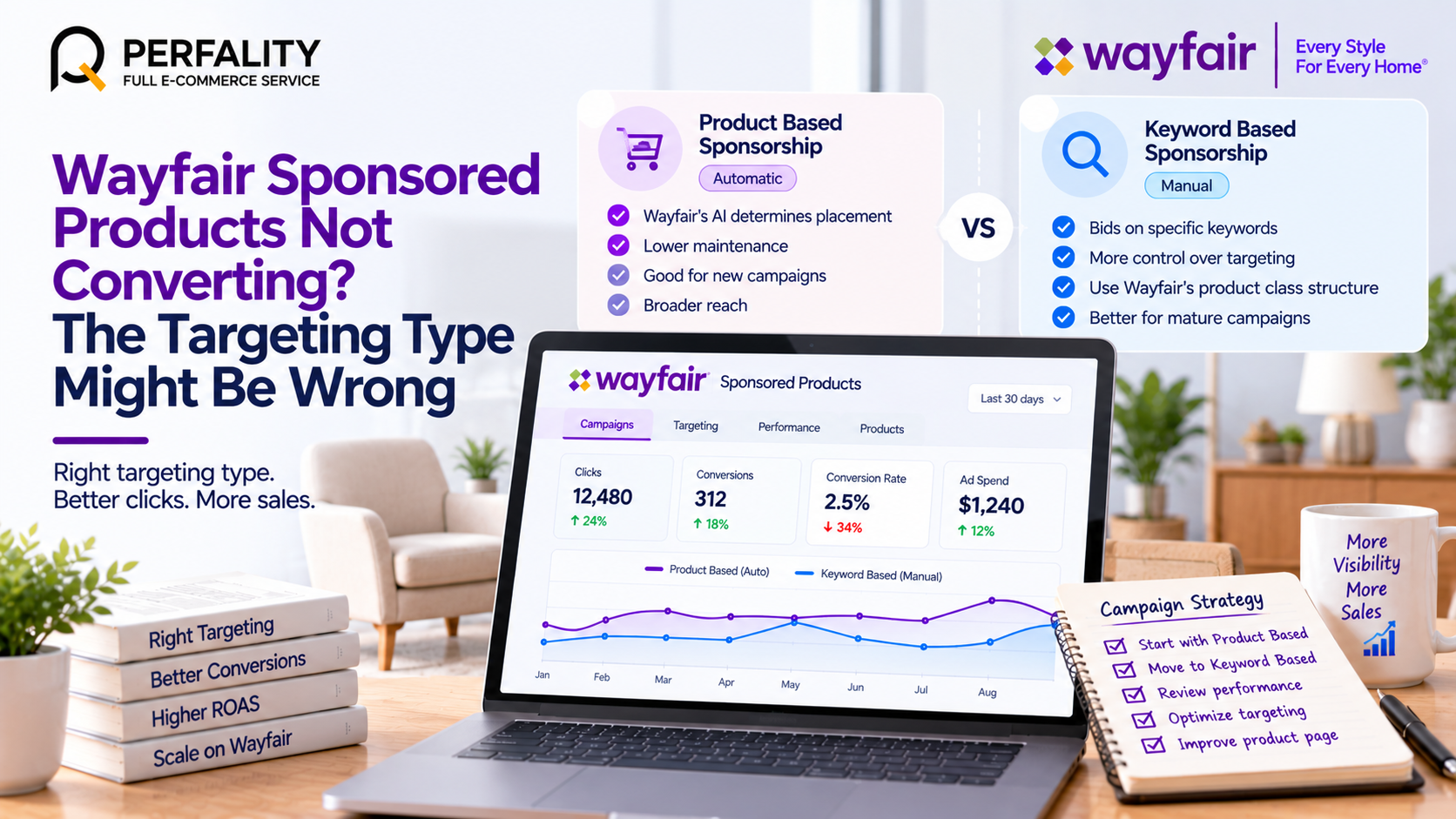
- Product Based Sponsorship: an automatic process where Wayfair’s own AI determines placement and relevance — lower maintenance, but less direct control over exactly which searches trigger the ad.
- Keyword Based Sponsorship: bids attributed to specific keywords rather than relying on automatic matching, giving meaningfully more control and optimization options at the cost of requiring more ongoing maintenance.
- Class-based targeting structure: keyword campaigns are organized by Wayfair’s product “Class” system, requiring familiarity with how Wayfair categorizes products rather than a freeform keyword list.
- A recommended progression: starting with product-targeted campaigns and gradually moving toward keyword-targeted campaigns as a category matures gives more control over exactly where spend goes.
Where Mismatched Targeting Wastes Budget
A brand with a well-understood, specific customer search pattern — buyers consistently searching a particular material, style, or use case — often gets more efficient spend from Keyword Based Sponsorship’s precision than from letting an automatic system make broader relevance calls. Conversely, a brand just starting to understand its Wayfair customer base may waste effort trying to manage granular keyword bids before there’s enough data to know which keywords actually convert, when the automatic system would do a perfectly reasonable job in the meantime.
How to Choose and Optimize Targeting Correctly
- Start new campaigns with Product Based Sponsorship to gather initial performance data with lower management overhead.
- Transition toward Keyword Based Sponsorship once there’s enough data to identify which specific search terms are actually driving conversions.
- Review ROI and conversion rate at the campaign level regularly, shifting spend toward campaigns with strong returns rather than spreading budget evenly.
- If click-through rate looks strong but conversion still lags, the issue is more likely elsewhere on the product page (SKU merchandising, pricing) than the targeting type itself.
How Perfality Approaches This
For Wayfair Sponsored Products accounts, targeting type is matched deliberately to campaign maturity and goal, rather than defaulting to one approach across every campaign. That includes:
- Maturity-based targeting selection: new campaigns start with Product Based Sponsorship, transitioning to Keyword Based Sponsorship once enough conversion data exists to justify the added management overhead.
- Class-structure familiarity: keyword campaigns are built around Wayfair’s product Class system specifically, rather than a generic keyword list disconnected from how Wayfair actually categorizes products.
- Campaign-level ROI review: performance is reviewed by campaign regularly, with budget shifted toward proven performers rather than spread evenly regardless of results.
- Page-versus-targeting diagnosis: when clicks are strong but conversion lags, the product page itself gets reviewed before assuming the targeting type needs to change.
Related Services
If Sponsored Products campaigns keep underperforming despite reasonable budget, checking whether the targeting type actually matches the campaign’s maturity and goal is worth doing before increasing spend further. A team that transitions deliberately from product-based to keyword-based targeting as data accumulates tends to get meaningfully better efficiency than defaulting to one approach indefinitely.
Depending on how you’re searching, this kind of support is also known by these names:
- Full-service Amazon management: Full Service Amazon Management, Full Service Amazon Agency, Amazon Full Service Agency, Full Service Amazon Marketing Agency, Best Full-Service Amazon Agency, Best Full Service Amazon Agency
- FBA-focused support: Amazon FBA Management Agency, Amazon FBA Agency, Amazon FBA Marketing Agency, Amazon FBA Management Service
- Listing and content optimization: Amazon Listing Optimization Services, Amazon Listing Optimization Agency, Amazon Listing Optimization Service, Amazon Product Listing Optimization Service, Amazon Product Listing Optimisation Service, Amazon Product Listing Optimisation Service USA
- Product listing services: Amazon Product Listing Service, Amazon Product Listing Service Provider, Best Amazon Product Listing Service Agency
- PPC and advertising management: Amazon PPC Management Service, Amazon PPC Management Service Agency, Best Amazon PPC Management Service, PPC Management Service For Amazon
- Account management: Best Amazon Account Management Services, Amazon Ecommerce Company
Frequently Asked Questions
Product Based Sponsorship is automatic, with Wayfair’s AI determining relevance and placement. Keyword Based Sponsorship lets you attribute bids to specific keywords directly, offering more control at the cost of more ongoing management.
Generally no. Starting with Product Based Sponsorship to gather initial data, then transitioning to Keyword Based Sponsorship once conversion patterns are clear, tends to work better than managing granular keywords without enough data yet.
This usually points to an issue on the product page itself — SKU merchandising, pricing, or content — rather than the ad targeting, since the ad’s job is just to generate the click.
If this is a recurring pain point rather than a one-off, it’s usually worth a quick conversation. Book a free 30-minute call with our team and we’ll walk through what’s actually happening on your account.
Have any questions? Let’s connect!