




- Perfality
- October 12, 2026
- 11:00 am
- Read Time: 10 mintues
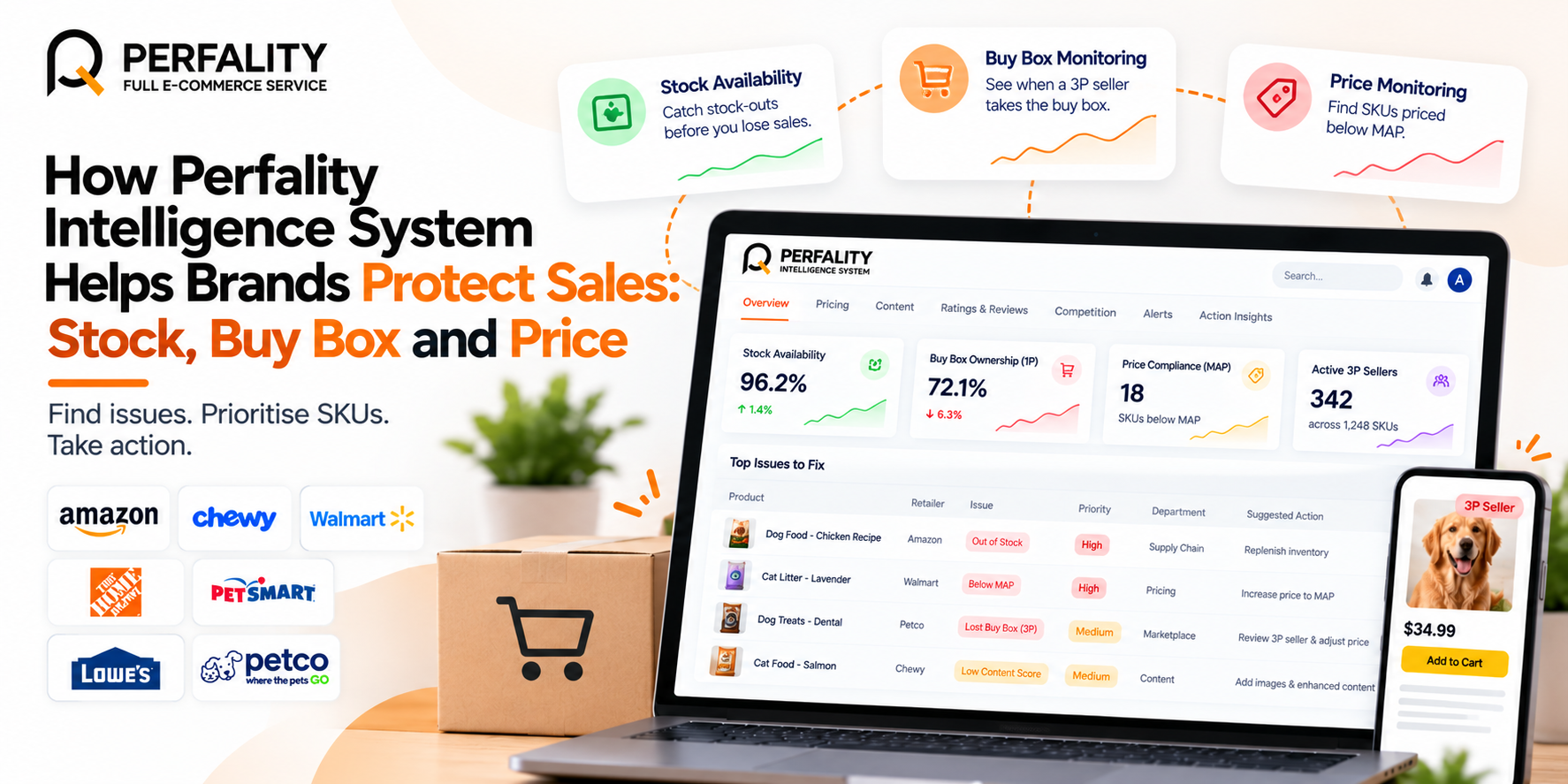
Perfality Intelligence System helps brands protect sales by watching the three things that most often cost them quietly at retailers: stock, price and the buy box. It records daily snapshots per SKU and retailer, shows which SKUs were out of stock, priced below MAP or lost to a third-party seller, and assigns each issue to the right team with a suggested action.
Perfality Intelligence System is a digital shelf intelligence platform by Perfality that turns retailer listing data into prioritised, SKU-level actions for brands. This post walks through how PIS handles each of these problems.
Key takeaways
- PIS tracks stock availability, buy box ownership and price for every SKU at every retailer it covers.
- Competitive Intelligence names the third-party seller that won the buy box and how many days they held it.
- Pricing Intelligence shows which SKUs are priced below MAP and by how much.
- Action Insights assigns each problem to Supply chain, Marketplace or Pricing with a suggested action.
What problems does Perfality Intelligence System catch?
Sales rarely fall off a cliff. They leak. PIS is built to surface four common leaks:
- Stock-outs. A listing that is out of stock cannot sell, and a page that fails to load is treated the same way.
- Lost buy boxes. The buy box is the “Add to cart” offer shown when several sellers offer the same product. A 3P (third-party) seller can win it from the brand’s own 1P (first-party) offer.
- Prices below MAP. MAP is the minimum advertised price a brand allows. A price below it can signal an unauthorised discount.
- Large price movement. A price that shifts by 10% or more over the tracked window deserves a second look.
How does PIS track stock availability?
The Overview page shows Stock Availability (1P + 3P) as a headline number. It is the share of tracked listing days in which the item was in stock. A listing that is out of stock, unavailable, temporarily out of stock or whose page failed to load counts as not in stock.
You can also create a stock availability alert for your company. Scope it to the whole portfolio or one category, and to all retailers or one. When the rule’s condition is true, it appears in the notification bell and on the Alerts page, with the worst offending SKU, which opens directly.
In Action Insights, the Supply chain department gets a row for each SKU in stock on fewer than 95% of days, so replenishment can be reviewed. Listings whose crawl failed go to the Data / Ops department for a re-crawl.
Why does buy box monitoring matter for brands?
Buy box monitoring matters because the buy box decides which seller gets most of the sales on a listing. When buy box monitoring is missing, a brand often learns about a lost buy box only after sales have dipped.
Good buy box monitoring does three things:
- It shows which SKUs lost the buy box, and to which seller.
- It shows how many days that seller held it.
- It links the problem to stock and price, which are the usual causes.
With buy box monitoring in Perfality Intelligence System, those answers sit next to the suggested action. Weekly buy box monitoring is therefore a short routine rather than a project.
A simple buy box monitoring routine looks like this:
- Open the buy box monitoring view and sort by SKUs that lost the buy box.
- Check stock and price for each SKU, since buy box monitoring usually points to one of those two causes.
- Assign the fix and note it in the action list.
- Repeat the buy box monitoring check after the next data load.
Teams that treat buy box monitoring as a weekly habit catch problems sooner. Buy box monitoring also gives account managers hard facts for conversations with sellers, since the days held and the SKUs affected are on the page. Without buy box monitoring, those conversations rely on guesswork.
How does PIS show who holds the buy box?
Perfality Intelligence System tracks buy box ownership in two places.
- Overview shows Buy Box Ownership (1P), the share of days the brand’s own seller holds the buy box while the item is in stock.
- Competitive Intelligence shows how many SKUs lost the buy box to a named third-party seller, which seller won it and for how many days. You can drill down to the exact SKUs, and the seller names and days won come from real crawl data.
On each product page, you can also see the buy box holder day by day, which makes it easy to tell whether a loss was a single bad week or a pattern.
In Action Insights, the Marketplace department receives a row for every SKU where the buy box was lost to a 3P seller, naming the seller and the days they held it.
How does PIS support MAP compliance and price monitoring?
Pricing Intelligence has three tabs. Summary shows price tiers and the largest price gaps against the brand’s own average. Products is a product-level pricing table with opportunities. Drivers goes deeper:
- categories with the highest and lowest discounts
- a discount and savings overview, and the largest discounted products
- coupon price impact
- MAP compliance, showing which SKUs are priced under MAP and by how much
- subscription price analysis
You can create a price change alert for your company, just like the stock alert. In Action Insights, the Pricing department gets a row for each SKU priced below MAP or with a price movement of 10% or more. A typical suggested action says to raise the listed price to at least the MAP amount, or to confirm that the discount is authorised.
What happens after PIS finds a problem?
Finding an issue is only half the job. Action Insights turns it into work. Each row shows the department, priority, SKU, product title, retailer, issue, what was found and a suggested action written from that SKU’s own numbers.
Priority depends on how many tracked SKUs an issue affects: High above 15%, Medium from 5% to 15% and Low up to 5%. Every row has an Open in tool link that jumps straight to the product, and the whole list downloads as Excel or CSV. We cover the page in detail in Action Insights.
What does a weekly routine look like?
- Open Overview, scope it to a retailer and review the four headline numbers and the key insight cards.
- Open Competitive Intelligence to see which SKUs lost the buy box and to whom.
- Open Pricing Intelligence, then Drivers, then MAP Compliance, to see which SKUs are priced under MAP.
- Download the Action Insights plan so Supply chain, Marketplace and Pricing each have their own list.
- Next week, check which SKUs are still on the list.
What does Perfality Intelligence System not do?
It is worth being clear about the limits:
- PIS shows what happened and what to do next. It does not change prices or contact sellers for you.
- Triggered alerts appear inside the tool, in the notification bell and on the Alerts page. They are not sent by email, Slack or SMS.
- Data is crawled in daily snapshots and loaded by the Perfality team. It is not a live feed.
- It helps teams spot and prioritise issues faster. It does not guarantee a sales uplift.
For help managing your seller account and listings, see Perfality’s Amazon account management services. For the full tour of the platform, read the Perfality Intelligence System overview.
How does buy box monitoring support Amazon account management?
Buy box monitoring is most useful when someone can act on what it finds. A brand with an Amazon FBA management agency or an Amazon FBA agency can hand over the exact SKUs where stock ran out or a seller took the buy box. An Amazon FBA marketing agency can then time promotions around healthy stock.
Perfality works as a full service Amazon agency, so stock and price problems can sit in the same plan as listings and ads. That is how full service Amazon management is meant to work. An Amazon FBA management service or an Amazon full service agency saves time when the problem list is already clear.
Brands comparing the best Amazon account management services should ask how each one spots buy box and price problems. The same applies to the best full-service Amazon agency, the best full service Amazon agency and a full service Amazon marketing agency. Evidence from daily snapshots makes that conversation more concrete.
Listing quality affects who wins the buy box over time. Amazon listing optimization services, an Amazon listing optimization agency or an Amazon listing optimization service can fix thin pages once monitoring flags them. The same is true of an Amazon product listing optimization service, an Amazon product listing service, an Amazon product listing service provider or the best Amazon product listing service agency.
For US brands, an Amazon product listing optimisation service and an Amazon product listing optimisation service USA both depend on accurate price and stock data. An Amazon ecommerce company that sells through several channels needs that data in one view.
Lost buy boxes also waste ad spend. An Amazon PPC management service, an Amazon PPC management service agency or the best Amazon PPC management service will want to pause or adjust campaigns on SKUs with no buy box. A PPC management service for Amazon can only do that if someone spots the problem first.
Frequently Asked Questions
Yes. Competitive Intelligence names the seller, shows how many days they held the buy box and lets you drill down to the exact SKUs. Seller names and days won come from real crawl data.
Pricing Intelligence compares the listing price with the MAP price held for your company and lists the SKUs priced under it, with the gap.
No. Alerts cover stock availability, price change, average rating and content completeness, and they appear in the notification bell and Alerts page inside the tool. Buy box losses show in Competitive Intelligence and Action Insights.
Amazon (the US and several international Amazon marketplaces), Chewy, Walmart, The Home Depot, PetSmart, Lowe’s, and Petco, or more.
By the share of tracked SKUs it affects: High above 15%, Medium from 5% to 15% and Low up to 5%.
Have any questions? Let’s connect!