




- Perfality
- September 22, 2026
- 5:42 pm
- Read Time: 10 mintues
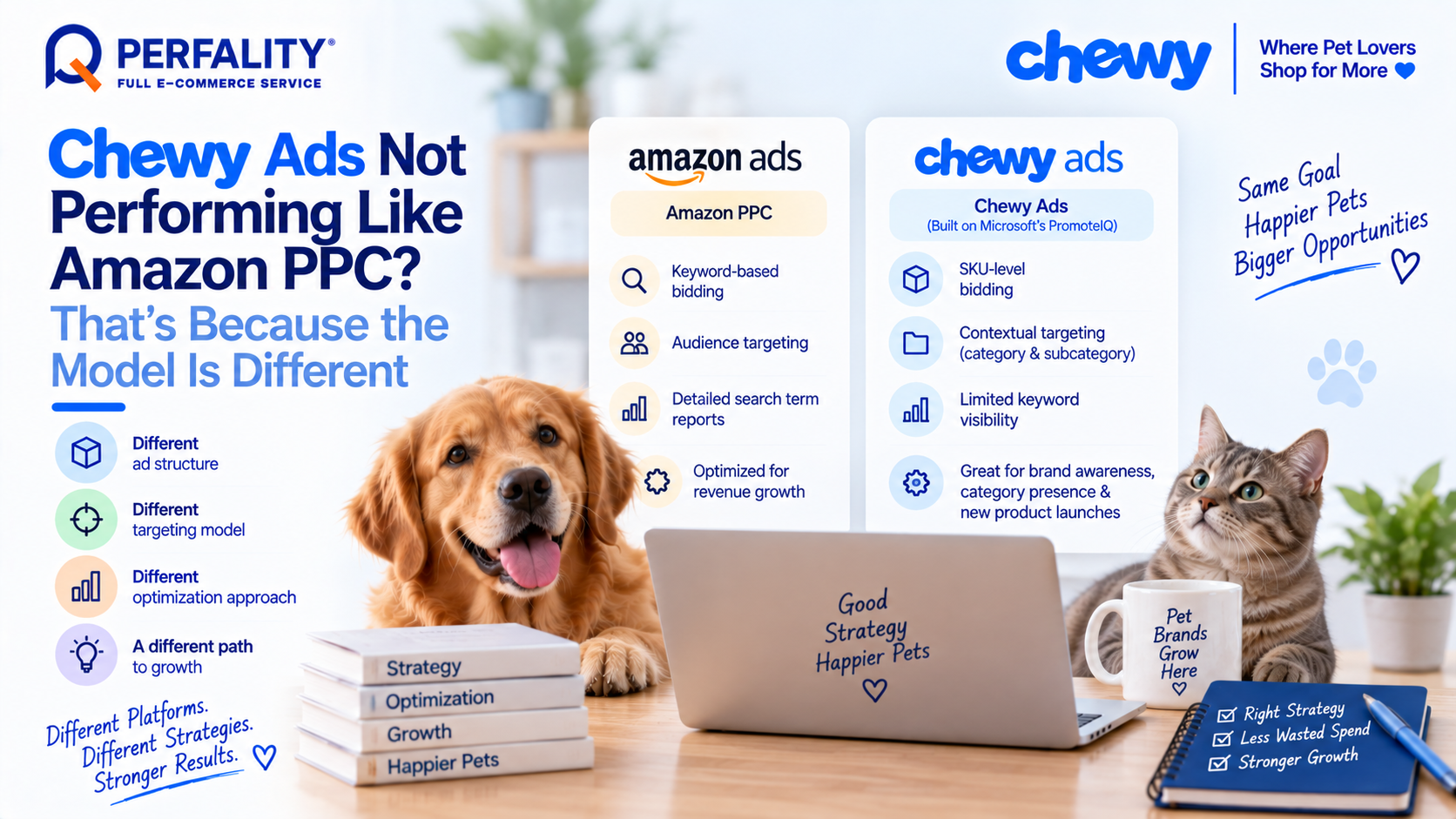
A campaign gets set up on Chewy the same way it would on Amazon, and the results don’t match expectations at all. Chewy Ads wasted spend often isn’t about budget or bid size — it’s a strategy mismatch, since Chewy’s advertising platform (built on Microsoft’s PromoteIQ) bids at the individual SKU level with contextual targeting, not the keyword-and-audience model Amazon sellers are used to.
Understanding this structural difference changes how a campaign should actually be built, not just how much should be spent on it.
Chewy Ads Wasted Spend: How the Platform Actually Differs From Amazon PPC
- SKU-level bidding: Chewy bids happen at the individual product level rather than on keywords, so budget priority is set per SKU, not per search term.
- Contextual, not audience-based, targeting: ads show based on the category or subcategory a shopper is browsing or searching within, rather than audience profile targeting.
- Limited keyword visibility: Chewy allows keyword bid modifiers, but sellers lack the kind of keyword-level performance visibility Amazon provides, making search-term-level optimization far more limited.
- Category and subcategory bid control: budget priority is set by adjusting bids at the category and subcategory level, which requires a different mental model than keyword-based campaign structuring.
Why Amazon-Trained Habits Waste Spend Here
A team accustomed to Amazon PPC’s emphasis on upper-funnel audience targeting and keyword-level optimization can end up applying the wrong lens entirely to Chewy — chasing keyword-level insights the platform doesn’t expose, or under-prioritizing SKU-level bid allocation, which is actually the primary lever available. Chewy’s own model rewards brand awareness, strong non-branded category presence, and promoting new launches rather than the topline revenue-growth playbook that works on Amazon.
How to Actually Structure Chewy Ads Spend
- Prioritize budget at the SKU level based on which products are genuinely ready to convert — strong content, competitive pricing, complete attributes — rather than spreading spend evenly.
- Set category and subcategory bids deliberately, understanding this is the primary targeting lever on Chewy rather than a secondary setting.
- Use available keyword bid modifiers where possible, but don’t expect the granular keyword-level reporting Amazon provides — judge performance at the SKU and category level instead.
- Lean into what Chewy’s model rewards: non-branded category visibility, new product launches, and promotional pushes rather than a pure revenue-growth audience-targeting strategy.
How Perfality Approaches This
For Chewy Ads accounts, campaigns are built around the platform’s actual mechanics rather than adapted from an Amazon playbook. That includes:
- SKU-readiness screening: only products with strong content, competitive pricing, and complete attributes get prioritized bid allocation, since the SKU itself is the primary targeting unit.
- Category and subcategory bid strategy: budget priority is set deliberately at this level, treating it as the platform’s core lever rather than a secondary adjustment.
- Realistic reporting expectations: performance is judged at the SKU and category level given Chewy’s limited keyword-level visibility, rather than forcing an Amazon-style keyword analysis onto data that doesn’t support it.
- Platform-appropriate campaign goals: campaigns are built around brand awareness, non-branded category presence, and launch support, matching what Chewy’s model actually rewards.
Related Services
If Chewy Ads results consistently underperform expectations set by Amazon PPC experience, the strategy itself is usually the first thing worth revisiting, not the budget. A team that understands Chewy’s SKU-level, contextual-targeting model from the start tends to avoid this exact mismatch rather than discovering it after months of spend.
Depending on how you’re searching, this kind of support is also known by these names:
- Full-service Amazon management: Full Service Amazon Management, Full Service Amazon Agency, Amazon Full Service Agency, Full Service Amazon Marketing Agency, Best Full-Service Amazon Agency, Best Full Service Amazon Agency
- FBA-focused support: Amazon FBA Management Agency, Amazon FBA Agency, Amazon FBA Marketing Agency, Amazon FBA Management Service
- Listing and content optimization: Amazon Listing Optimization Services, Amazon Listing Optimization Agency, Amazon Listing Optimization Service, Amazon Product Listing Optimization Service, Amazon Product Listing Optimisation Service, Amazon Product Listing Optimisation Service USA
- Product listing services: Amazon Product Listing Service, Amazon Product Listing Service Provider, Best Amazon Product Listing Service Agency
- PPC and advertising management: Amazon PPC Management Service, Amazon PPC Management Service Agency, Best Amazon PPC Management Service, PPC Management Service For Amazon
- Account management: Best Amazon Account Management Services, Amazon Ecommerce Company
Frequently Asked Questions
Chewy Ads runs on Microsoft’s PromoteIQ, a self-service platform offering product listing ads bid at the individual SKU level rather than on keywords.
No. Chewy Ads uses contextual targeting, showing ads based on the category or subcategory a shopper is browsing or searching within, rather than audience-profile-based targeting.
Not to the same degree as Amazon. Chewy allows keyword bid modifiers, but sellers lack the detailed keyword-level performance visibility Amazon provides, making SKU and category-level analysis more practical.
If this is a recurring pain point rather than a one-off, it’s usually worth a quick conversation. Book a free 30-minute call with our team and we’ll walk through what’s actually happening on your account.
Have any questions? Let’s connect!